
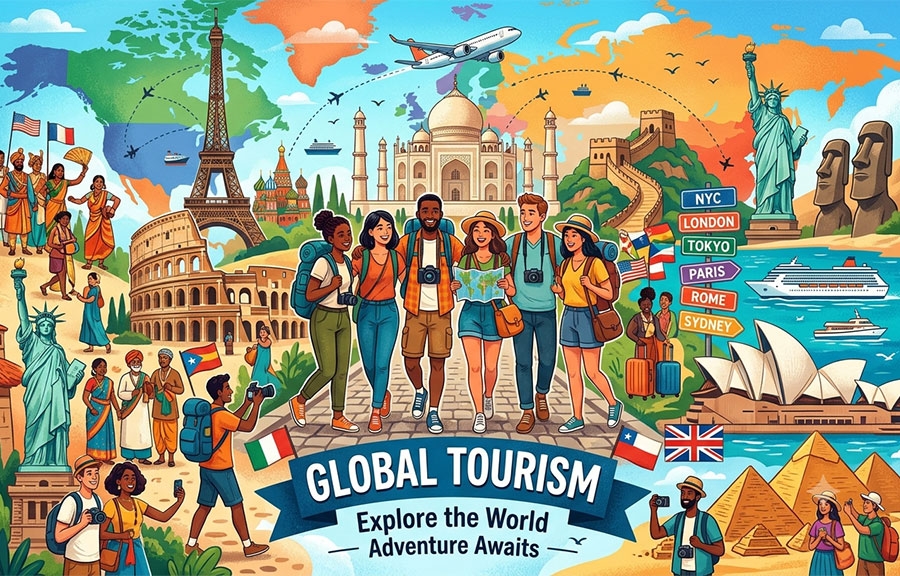
Global Tourism: Travel, Destinations, Culture & The Future of Travel
Travel has become one of the most meaningful ways people discover the world, experience different cultures and create memories beyond their everyday surroundings. From historic cities and natural landscapes to local food, festivals, beaches and adventure destinations, global tourism connects people with places in ways that are both personal and educational.
Global tourism is also an important part of the modern economy. It supports hotels, airlines, restaurants, guides, local businesses, artisans, transport services and millions of jobs. As travelers become more conscious about value, safety, sustainability and authentic experiences, the tourism industry continues to evolve.
1. What Is Global Tourism?
Global tourism refers to travel between countries and regions for leisure, culture, business, education, wellness, adventure and other purposes. It includes the complete travel experience—from planning and transportation to accommodation, sightseeing, food and activities.
Tourism is no longer limited to traditional sightseeing. Travelers increasingly look for experiences that help them understand local communities, nature, history and everyday life.
Travel becomes more meaningful when we do not simply visit a place, but take time to understand its people, culture and character.
2. Why Tourism Matters to the Global Economy
Tourism creates economic activity across many connected sectors. Visitors spend money on accommodation, transportation, restaurants, attractions, shopping and local experiences, helping small businesses and large travel companies alike.
For many destinations, tourism also encourages investment in roads, airports, public spaces, cultural attractions and hospitality services. Responsible tourism can therefore contribute to local development while protecting the identity of a destination.
3. Popular Global Travel Destinations
Travelers around the world are attracted to destinations for different reasons. Europe is known for historic cities and cultural heritage, Asia offers diverse traditions and landscapes, the Middle East combines ancient history with modern attractions, while Africa, the Americas and Oceania provide remarkable wildlife, nature and outdoor experiences.
The best destination depends on a traveler's interests, budget, available time and preferred pace. A meaningful trip does not always require visiting the most famous location; smaller cities and less crowded regions can offer equally memorable experiences.
4. Cultural Tourism and Heritage Travel
Cultural tourism allows visitors to explore history, architecture, traditional arts, music, food, festivals and local customs. Museums, heritage sites, historic neighborhoods and community-led experiences can provide a deeper understanding of how societies have developed.
Travelers should approach cultural experiences respectfully. Learning a few local phrases, following dress or photography rules and supporting local businesses can make the experience more positive for both visitors and residents.
5. Sustainable and Responsible Tourism
Sustainable tourism aims to reduce negative environmental and social impacts while ensuring destinations continue to benefit from visitors. Practical choices include reducing waste, avoiding unnecessary single-use plastics, respecting wildlife and choosing businesses that support local communities.
Responsible tourism also means respecting local laws, cultural traditions and natural areas. Travelers can make a difference through simple decisions about transportation, accommodation, food and activities.
6. Eco-Tourism and Nature Travel
Eco-tourism focuses on natural environments while encouraging conservation and responsible visitor behavior. National parks, forests, mountains, wetlands, islands and wildlife destinations can offer unforgettable experiences when managed carefully.
Visitors should avoid disturbing animals, stay on designated trails and follow conservation guidelines. Nature travel is most valuable when tourism helps protect the places people come to see.
7. Adventure Tourism Around the World
Adventure tourism includes activities such as trekking, cycling, rafting, diving, skiing, camping and wildlife exploration. It appeals to travelers who want physical activity, outdoor challenges and a closer connection with nature.
Safety should always come before excitement. Travelers should use qualified operators where appropriate, understand weather and terrain conditions, carry suitable equipment and avoid activities beyond their experience level.
8. Food Tourism and Local Experiences
Food is one of the most enjoyable ways to understand a destination. Local markets, traditional restaurants, street food, cooking classes and regional specialties can reveal stories about history, agriculture and community life.
Instead of only choosing familiar international chains, travelers can explore trusted local establishments and ask residents for recommendations. Supporting local food businesses also helps tourism spending reach the community.
9. Beach, Island and Coastal Tourism
Coastal destinations remain popular for relaxation, water sports, marine experiences and scenic beauty. Beaches and islands can attract visitors throughout the year, but fragile coastal ecosystems require thoughtful tourism management.
Travelers can help protect coastal areas by avoiding litter, respecting marine life, using reef-safe practices where appropriate and choosing operators that follow responsible environmental standards.
10. Wellness and Medical Tourism
Wellness tourism includes travel focused on relaxation, fitness, meditation, spa experiences, healthy food and personal wellbeing. Medical tourism, meanwhile, involves traveling for healthcare services and requires careful research into providers, regulations, costs and follow-up care.
Anyone considering treatment abroad should verify the credentials of healthcare providers and understand potential risks, insurance coverage, travel requirements and aftercare arrangements.
11. Family-Friendly Global Travel
Family travel works best when the itinerary matches the age, interests and energy levels of everyone traveling. Families can combine educational attractions, outdoor activities, cultural experiences and enough free time to avoid an exhausting schedule.
Planning ahead for transportation, meals, accommodation, weather and emergency contacts can make international travel much smoother, especially when traveling with young children or older family members.
12. Digital Technology and Smart Travel
Technology has transformed the way people plan and experience travel. Travelers can compare flights and hotels, use digital maps, store tickets on mobile devices, translate languages and research attractions before reaching a destination.
Digital convenience should be balanced with privacy and security. Travelers should use trusted networks, protect accounts with strong authentication and keep important travel documents available securely offline when possible.
13. Social Media and Travel Inspiration
Social media has made it easier to discover destinations, restaurants, attractions and travel ideas. Photos and videos can inspire people to explore places they may never have considered before.
However, online content does not always show the complete reality of a destination. Travelers should check current information, local conditions, official guidance and independent reviews rather than relying on viral posts alone.
14. Budget Travel and Smart Planning
International travel does not have to be expensive when planned carefully. Comparing transportation options, traveling during less busy periods, selecting suitable accommodation and setting a realistic daily budget can help control costs.
Smart travelers also leave room for unexpected expenses. A budget should consider local transportation, meals, entrance fees, insurance, connectivity and emergency needs rather than focusing only on flights and hotels.
15. Travel Safety and Preparedness
Good preparation can prevent many common travel problems. Before departure, travelers should check passport and visa requirements, understand local laws, review official travel advisories and keep copies of important documents.
It is also wise to know emergency numbers, carry appropriate insurance and share essential itinerary information with a trusted person. Basic awareness can make a major difference when traveling internationally.
16. Tourism and Local Communities
Tourism is most beneficial when local communities have a meaningful role in the visitor economy. Local guides, family-run hotels, artisans, restaurants and cultural organizations can help ensure tourism income reaches residents.
Visitors can contribute by buying authentic local products, hiring community-based guides and respecting residential areas. Being a considerate guest helps create a healthier relationship between tourism and local life.
17. Festivals, Events and Experiential Travel
Festivals, sporting events, concerts and cultural celebrations can turn an ordinary trip into a memorable experience. Event-based travel allows visitors to see a destination during a special period and participate in traditions that may not be visible at other times.
Because popular events can attract large crowds, travelers should book accommodation early, understand entry requirements and plan transportation in advance.
18. The Future of Global Tourism
The future of tourism is likely to be shaped by personalization, digital services, sustainable travel, flexible planning and demand for authentic experiences. Travelers increasingly want convenience without losing the human connection that makes travel special.
Destinations are also exploring ways to manage visitor numbers, protect natural resources and distribute tourism benefits more fairly. The industry that emerges will need to balance growth with long-term destination health.
19. Careers in the Tourism Industry
Tourism offers career opportunities in hospitality, aviation, travel planning, destination management, event management, food services, tour operations, digital marketing, travel content creation and customer experience.
Strong communication, language ability, technology skills, cultural awareness and problem-solving can be valuable across many tourism roles. Practical experience and knowledge of specific destinations can also help professionals stand out.
20. How to Become a More Responsible Traveler
Responsible travel begins with awareness. Research your destination, respect local customs, reduce waste, protect natural areas and spend money with businesses that contribute positively to the community.
Most importantly, travel with curiosity and respect. A thoughtful traveler leaves with memories and knowledge while making a destination better—or at least no worse—for the people and environment that call it home.
Global Tourism Trends to Watch
Important tourism trends include sustainable travel, slow tourism, wellness trips, cultural experiences, digital nomad travel, nature-based tourism, personalized itineraries and technology-supported travel planning.
As travel habits continue to change, destinations that offer genuine experiences, safety, accessibility and responsible tourism practices are likely to remain attractive to a wide range of travelers.
Frequently Asked Questions
What is global tourism?
Global tourism is travel across countries and regions for leisure, culture, business, education, wellness, adventure and other purposes.
Why is tourism important?
Tourism supports jobs, local businesses, cultural exchange and economic activity across hospitality, transportation, food, entertainment and other sectors.
What is sustainable tourism?
Sustainable tourism seeks to reduce environmental and social harm while ensuring destinations and local communities can benefit from tourism over the long term.
How can travelers support local communities?
Travelers can use local guides, stay at locally operated properties, eat at local restaurants, buy authentic products and respect community customs.
How can I travel safely internationally?
Check passport and visa requirements, review official travel information, arrange suitable insurance, protect important documents and understand local laws and emergency procedures.
What are popular future trends in tourism?
Sustainable travel, wellness tourism, authentic cultural experiences, nature travel, personalized trips and technology-enabled services are among the major trends shaping tourism.
Final Thoughts
Global tourism is about much more than visiting famous landmarks. It is an opportunity to learn, connect, experience different cultures and see the world from new perspectives. When planned thoughtfully, travel can create lasting memories while supporting local economies and communities.
The future of tourism will depend on finding the right balance between exploration and responsibility. Travelers, businesses and destinations all have a role to play in protecting natural and cultural resources while creating welcoming experiences. Travel with curiosity, plan wisely and respect every place you visit—the world is full of stories waiting to be discovered.