Culture & Festivals of India: Traditions, Heritage & Celebrations
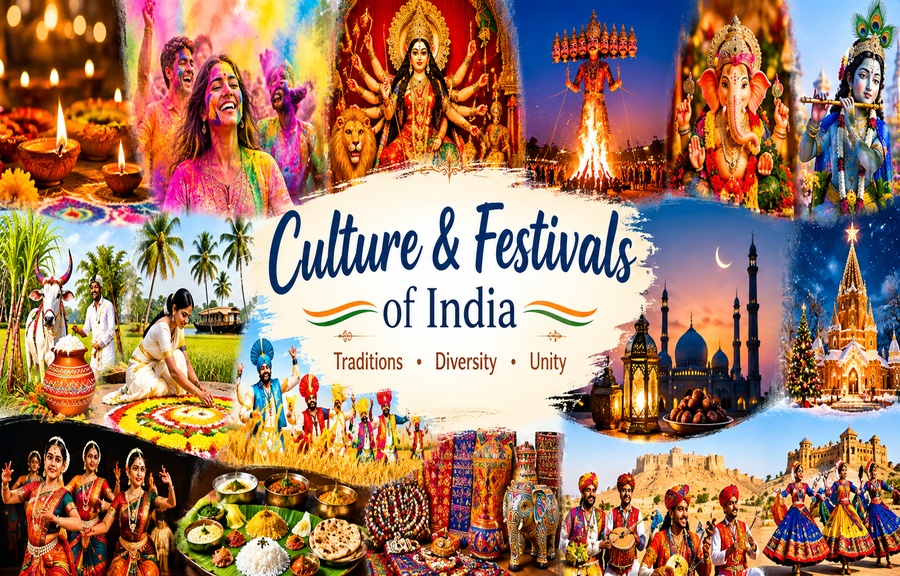
India is a land of extraordinary cultural diversity, where ancient traditions and modern life come together in everyday celebrations. Across different states and communities, festivals bring people together through prayer, music, dance, food, family gatherings, colourful decorations and shared moments of happiness.
The culture and festivals of India are not just about special days on the calendar. They reflect the country’s history, regional identity, spiritual traditions, local art, languages, food habits and community values. From the lights of Diwali to the colours of Holi and the harvest celebrations of Pongal and Baisakhi, every festival has a story and a unique local character.
1. The Rich Cultural Diversity of India
Indian culture has developed over thousands of years and includes many languages, customs, cuisines, art forms, faith traditions and regional lifestyles. What makes India especially interesting is that cultural practices can change dramatically from one region to another while still sharing common values such as family, hospitality, respect and community.
Traditional clothing, folk art, handicrafts, music, dance and local celebrations continue to play an important role in preserving this diversity. At the same time, younger generations are giving many traditions new forms through social media, creative arts, modern events and cultural tourism.
India’s festivals are more than celebrations; they are living traditions that connect people, generations, communities and history.
2. Diwali – The Festival of Lights
Diwali is one of the most widely celebrated festivals in India. Homes are cleaned and decorated, lamps and lights brighten streets and families come together for prayers, sweets, gifts and festive meals.
Although Diwali traditions vary across regions and communities, the festival is widely associated with light, hope, prosperity and the victory of good over evil. Rangoli, diyas, traditional sweets and family gatherings make the celebration especially memorable.
3. Holi – The Festival of Colours
Holi is famous for its joyful atmosphere, vibrant colours, music and social celebrations. People meet friends and relatives, share festive foods and enjoy the playful spirit of the occasion.
The festival also has deep cultural and religious traditions, including Holika Dahan. Regional customs differ, but the broader message of togetherness, renewal and letting go of past differences remains an important part of Holi.
4. Navratri and Durga Puja
Navratri is celebrated in different ways across India, making it a wonderful example of the country’s regional diversity. Gujarat is well known for Garba and Dandiya, while West Bengal, Assam and other parts of eastern India are famous for Durga Puja celebrations.
Durga Puja combines devotion with art, community participation, music, food and beautifully designed pandals. In many places, the festival becomes a major cultural event that attracts local communities as well as visitors.
5. Dussehra – Celebrating the Victory of Good
Dussehra, also known as Vijayadashami in many parts of India, is associated with the victory of good over evil. The festival is observed through religious ceremonies, cultural performances and community events.
In several cities, Ram Leela performances narrate episodes from the Ramayana, while effigies of Ravana and other figures are traditionally displayed and burned as part of the celebrations. Regional customs make Dussehra different and interesting from one place to another.
6. Ganesh Chaturthi – Faith, Art and Community
Ganesh Chaturthi is especially popular in Maharashtra and several other parts of India. Beautiful idols of Lord Ganesha are installed in homes and community spaces, followed by prayers, cultural activities and gatherings.
The festival has also become an important example of community participation and public art. Increasing awareness about eco-friendly idols and responsible celebrations is helping communities make the festival more environmentally conscious.
7. Janmashtami – Celebrating Lord Krishna
Janmashtami celebrates the birth of Lord Krishna and is observed with devotional singing, prayers, fasting, temple visits and cultural programmes. Places associated with Krishna traditions, including Mathura and Vrindavan, become particularly vibrant during the festival season.
In parts of western India, Dahi Handi adds a lively community dimension to the celebrations, with groups forming human pyramids to reach a decorated pot.
8. Pongal – A Harvest Festival of Tamil Nadu
Pongal is a major harvest festival of Tamil Nadu and is closely connected with agriculture, gratitude and family traditions. Homes are decorated with kolam designs, and the traditional Pongal dish is prepared as part of the celebration.
The festival highlights the relationship between people, farming, nature and animals. Its traditions offer a glimpse into the agricultural roots and cultural identity of Tamil Nadu.
9. Onam – Kerala’s Grand Cultural Celebration
Onam is one of Kerala’s most important festivals and is celebrated with elaborate flower decorations called pookalam, traditional meals, cultural programmes and community gatherings.
Vallam Kali, or traditional boat races, and other local events add to the festive atmosphere. Onam demonstrates how food, folklore, art and community participation can come together in one celebration.
10. Baisakhi – Harvest and Community Spirit
Baisakhi is an important festival in Punjab and is strongly associated with the harvest season. The celebration includes music, dance, traditional foods and community gatherings.
For Sikhs, Baisakhi also has major historical and religious significance. Gurdwaras, kirtan and community service form an important part of the day, reflecting the values of devotion and service.
11. Eid Celebrations in India
Eid is celebrated by Muslim communities across India and is marked by prayers, family visits, greetings, charitable giving and special meals. Markets and neighbourhoods often take on a festive atmosphere as families prepare traditional dishes and sweets.
Indian Eid traditions can vary by region, with local cuisines and customs adding their own character. The celebration also highlights the importance of generosity, compassion and community.
12. Christmas and India’s Cultural Diversity
Christmas is celebrated across India, particularly in communities with Christian traditions, while many people from other backgrounds also participate in the festive atmosphere. Churches, homes, markets and public spaces may feature decorations, lights, music and special events.
Goa, Kerala, parts of the Northeast and several major cities are known for distinctive Christmas traditions. Local food, carols and community gatherings give the festival a uniquely Indian flavour.
13. Folk Music and Traditional Dance
Music and dance are central to Indian cultural life. Classical traditions such as Bharatanatyam, Kathak, Odissi, Kathakali and Kuchipudi coexist with hundreds of folk traditions rooted in local communities.
Folk dances such as Garba, Bhangra, Ghoomar and Bihu reflect regional history and social life. Festivals provide an important stage for these art forms and help younger audiences discover traditional performance.
14. Indian Food and Festival Traditions
Food is one of the most enjoyable ways to experience Indian culture. Festivals often have special dishes, sweets and cooking traditions that are prepared at home and shared with family, friends and neighbours.
From laddoo and gujiya to modak, payasam, pongal, festive biryani and regional snacks, Indian festival food reflects local ingredients, history and family recipes. Sharing food is often as important as preparing it.
15. Traditional Clothing and Cultural Identity
Festivals are also occasions when people proudly wear traditional and regional clothing. Sarees, salwar suits, lehengas, kurta-pajamas, dhotis and many regional styles add colour and character to celebrations.
Traditional textiles such as Banarasi silk, Kanchipuram silk, Phulkari, Bandhani and handloom fabrics represent generations of craftsmanship. Supporting local artisans helps keep these skills alive.
16. Regional Festivals of India
India’s festival calendar goes far beyond the most widely known celebrations. Bihu in Assam, Hornbill Festival in Nagaland, Losar in Himalayan communities, Rath Yatra in Odisha, Pushkar fairs and numerous village festivals showcase the country’s remarkable regional diversity.
These celebrations are valuable because they preserve local stories, crafts, music, cuisine and customs. Travellers who explore regional festivals often discover a more personal and authentic side of Indian culture.
17. Festivals, Tourism and Local Communities
Cultural festivals can create meaningful opportunities for tourism and local businesses. Hotels, transport providers, artisans, food sellers, performers and small businesses often benefit from increased visitor activity during major celebrations.
Responsible cultural tourism should respect local customs, avoid overcrowding sensitive heritage spaces, reduce waste and support local communities. Visitors can make their experience better by learning the meaning behind a celebration instead of treating it only as a photo opportunity.
18. Preserving India’s Living Heritage
Culture survives when people practise it, teach it and pass it to the next generation. Families, schools, cultural organisations, artists and communities all play a role in preserving languages, crafts, music, dance, food traditions and festivals.
Technology can also help. Digital storytelling, online archives, educational videos and social media can introduce traditional culture to younger audiences while creating new ways to document and celebrate heritage.
Frequently Asked Questions
What is Indian culture?
Indian culture is a broad and diverse collection of traditions, languages, arts, food practices, clothing, beliefs, social customs, music, dance and regional lifestyles that have developed across the country over centuries.
Which are the most famous festivals of India?
Diwali, Holi, Navratri, Durga Puja, Dussehra, Ganesh Chaturthi, Janmashtami, Pongal, Onam, Baisakhi, Eid and Christmas are among the widely celebrated festivals in India.
Why are festivals important in Indian culture?
Festivals bring families and communities together while preserving stories, traditions, food, music, dance, religious practices and regional identity.
Which Indian festivals are linked with harvests?
Pongal, Baisakhi, Onam and Bihu are well-known harvest-related celebrations, although their traditions and meanings differ by region.
How can tourists experience Indian culture respectfully?
Visitors should learn basic local customs, dress appropriately where required, ask before photographing people or rituals, follow event rules, avoid littering and support local artisans and businesses.
Why is regional culture important in India?
Regional culture preserves local languages, crafts, food, music, dance, stories and community traditions. Together, these regional identities create India’s wider cultural diversity.
Final Thoughts
The culture and festivals of India tell a story of diversity, continuity and community. Every region adds its own colours, flavours, music, traditions and celebrations, creating a cultural landscape that is both deeply rooted and constantly evolving.
Exploring Indian festivals with curiosity and respect can offer more than a memorable celebration. It can help us understand the people, history, creativity and values that make India’s cultural heritage so rich and enduring.