Global Education: Opportunities, Skills & Study Abroad Guide
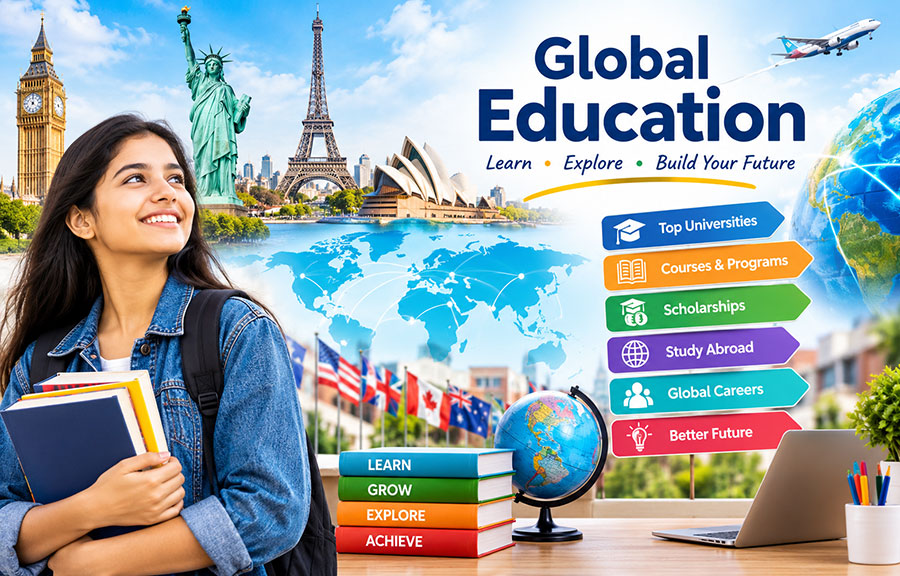
Education is no longer limited by borders. Students today can learn from universities, teachers, researchers and digital platforms across the world, making global education one of the most exciting opportunities of the modern era.
From studying at internationally recognised universities to joining exchange programmes, online courses, vocational institutions and research communities, global education can open doors to new knowledge, cultures, careers and personal growth. The right choice, however, depends on more than a university's name—it also depends on course quality, affordability, career opportunities, location, student support and long-term goals.
1. What Is Global Education?
Global education refers to learning opportunities that connect students with institutions, ideas, skills and people across countries and cultures. It includes international higher education, student exchange programmes, overseas study, online international learning, scholarships, research opportunities and cross-border professional education.
Its biggest strength is exposure. Students can experience different teaching methods, academic perspectives, cultures and workplace environments while developing the confidence to communicate in an increasingly connected world.
Global education is not simply about earning a degree abroad; it is about learning to understand the world and finding your place in it.
2. Why Global Education Matters Today
The world of work is becoming increasingly international. Companies collaborate across borders, technology connects teams in different countries and many careers require cultural awareness alongside technical knowledge.
International education can help students build independent thinking, communication skills, adaptability and a broader understanding of global issues. These qualities can complement academic qualifications and become valuable throughout a career.
3. Choosing the Right Country for Education
There is no single best country for every student. A good destination should match the student's subject, budget, preferred learning environment, career plans and lifestyle expectations.
Before choosing a country, compare tuition fees, living expenses, academic reputation, course structure, language requirements, accommodation, student support, work rules and available scholarship opportunities. Looking beyond rankings can lead to a much better personal fit.
4. Choosing the Right University and Course
A university may be famous, but that does not automatically make every course the right choice. Students should examine the curriculum, teaching approach, accreditation, faculty expertise, research opportunities, practical projects, internships and graduate outcomes.
Read official course information carefully and compare several institutions before applying. Understanding what you will actually study is more useful than choosing a programme based only on its title or popularity.
5. Popular Global Study Destinations
Students from around the world consider destinations such as the United States, United Kingdom, Canada, Australia, Germany, France, Ireland, New Zealand and other European and Asian countries for higher education. Each destination has its own academic system, costs, admission process and student experience.
Rather than following trends blindly, students should compare destinations according to their individual academic and career goals. A less expensive or more specialised option can sometimes provide greater value than a highly ranked but unsuitable programme.
6. Scholarships and Financial Planning
Cost is one of the most important parts of planning international education. Students should calculate tuition, accommodation, food, transportation, insurance, study materials, visa-related expenses and an emergency budget before making a decision.
Scholarships, university grants, government-funded programmes and other legitimate financial-aid opportunities may reduce the overall cost. Always check funding information on official university or government websites and carefully review eligibility conditions and deadlines.
7. Admission Requirements
Admission requirements vary by country, university and course. Depending on the programme, students may need academic transcripts, a statement of purpose, recommendation letters, a portfolio, entrance tests or proof of language proficiency.
Start preparing early. Keeping academic documents, identification documents, test results and application deadlines organised can make the process less stressful and reduce the risk of missing an important requirement.
8. English Language and Communication Skills
For students planning to study in an English-speaking academic environment, language ability is important not only for admission but also for everyday learning. Lectures, assignments, presentations, group discussions and professional networking all require clear communication.
Students can improve by reading regularly, practising speaking, building academic vocabulary, listening to lectures and writing structured answers. Strong communication skills can make the transition to an international classroom much easier.
9. Online and Hybrid Global Education
Global education does not always require moving to another country. Online and hybrid programmes allow learners to access courses, certifications, lectures and professional communities from institutions around the world.
This model can be useful for working professionals, students with financial constraints and learners who want to build specific skills without committing to a full overseas degree. The key is to verify course quality, accreditation where relevant and the credibility of the provider.
10. Student Exchange and International Exposure
Exchange programmes can provide international exposure for a shorter period while allowing students to experience another academic and cultural environment. They can help develop independence, teamwork, cultural awareness and confidence.
Students should check whether their institution has exchange partnerships and understand credit transfer, accommodation, insurance, travel and programme requirements before applying.
11. Vocational and Skill-Based Education
Global education is not only about traditional university degrees. Vocational training, technical education, professional certifications and industry-focused programmes can provide practical skills for changing job markets.
Fields such as information technology, healthcare, engineering, design, hospitality, business, renewable energy and digital services continue to create opportunities for learners with relevant skills. Students should choose programmes based on genuine interest, ability and realistic career demand.
12. Research and Innovation Opportunities
International universities and research institutions can provide opportunities to work with experts, laboratories, academic networks and multidisciplinary teams. Students interested in science, technology, medicine, social sciences and other research fields should investigate faculty research areas before applying.
A strong research environment can help students develop analytical thinking, problem-solving ability, academic writing and collaboration skills that remain valuable beyond university.
13. Benefits of Studying Abroad
Studying abroad can provide academic and personal benefits. Students may experience new teaching styles, build international friendships, become more independent and gain a broader understanding of different societies.
Living in another country can also teach practical lessons that are difficult to learn from textbooks—managing a budget, navigating unfamiliar systems, communicating across cultures and adapting to change.
14. Challenges of Global Education
International education can also be challenging. Students may face homesickness, cultural adjustment, financial pressure, academic differences, language barriers or the responsibility of managing daily life independently.
Preparing for these realities is important. Researching the destination, connecting with student communities, maintaining a realistic budget and asking institutions about student-support services can make the transition smoother.
15. Global Education and Career Opportunities
Education can become more valuable when it is connected to practical career goals. Students should look for opportunities such as internships, industry projects, career services, networking events and professional communities while studying.
International exposure may strengthen a CV, but employers also look for demonstrable skills, experience, communication, problem-solving and the ability to contribute to a team. A qualification works best when combined with practical capability.
16. Technology Is Changing Education
Artificial intelligence, online learning platforms, virtual classrooms and digital collaboration tools are changing how people learn. Students can now supplement classroom education with global lectures, digital libraries, professional communities and specialised courses.
Technology should be used as a learning partner rather than a replacement for critical thinking. The ability to verify information, ask good questions and use digital tools responsibly is becoming increasingly important.
17. How to Prepare for International Education
Start with a clear academic and career goal. Shortlist suitable courses, compare countries and institutions, estimate the complete cost, check admission requirements and create a timeline for tests and applications.
It is also useful to prepare financially and emotionally. Learn about the destination's culture, weather, transport, accommodation and student life. Being prepared can turn a major international move into a more confident experience.
18. Global Education for Indian Students
For Indian students, international education can offer access to different academic systems, specialised courses, research environments and international professional networks. However, students and families should make decisions carefully rather than relying on social-media trends or promises from unverified agents.
Compare official university information, understand total costs, verify admission and visa requirements through authoritative sources, and keep copies of all important documents. A well-researched decision is usually safer than a rushed one.
19. Building a Global Mindset
A global mindset is about more than travelling or studying overseas. It means being curious about different perspectives, respecting cultural differences, communicating thoughtfully and being willing to learn from people with different experiences.
Students can develop this mindset through international collaboration, reading global news, learning languages, participating in multicultural activities and engaging with people from different backgrounds.
20. The Future of Global Education
The future of education is likely to be more flexible, connected and skills-focused. Students may combine university study with online learning, professional certificates, international projects and work experience throughout their education journey.
As technology changes the workplace, lifelong learning will become increasingly important. The strongest learners will not simply collect qualifications; they will continue updating their knowledge and adapting their skills.
How to Choose the Best Global Education Path
Begin with yourself: What do you want to learn? What career would you like to build? What can you realistically afford? Do you prefer a traditional university, vocational programme, exchange experience or online education?
Once these questions are clear, compare countries and institutions using reliable information. Look at the complete student experience—not just rankings or advertisements. A good education decision should be academically suitable, financially realistic and connected to your long-term goals.
Frequently Asked Questions
What is global education?
Global education includes learning opportunities that connect students with international institutions, cultures, ideas, skills and academic or professional communities.
Which country is best for international students?
There is no universal best country. The right destination depends on the student's course, budget, academic goals, career plans, language ability and preferred lifestyle.
Is studying abroad worth it?
It can be valuable when the programme provides strong academic or career benefits and the total cost is manageable. Students should compare the complete investment before deciding.
Can I get global education online?
Yes. Online and hybrid programmes can provide access to international courses and professional learning without requiring students to relocate.
How can students find scholarships?
Start with official university, government and recognised scholarship-provider websites. Check eligibility, funding coverage and deadlines carefully before applying.
What skills are important for global education?
Communication, independent learning, digital literacy, critical thinking, adaptability, teamwork and cross-cultural awareness are especially useful.
Final Thoughts
Global education is about creating opportunities to learn beyond familiar boundaries. Whether a student chooses an overseas university, an exchange programme, an international online course or a skill-based qualification, thoughtful planning can make the journey more meaningful.
The best education decision is not necessarily the most expensive or the most famous one. It is the one that fits your interests, abilities, finances and future ambitions. Learn with curiosity, verify information carefully and keep building skills—and education can become a powerful foundation for a truly global career and life.