
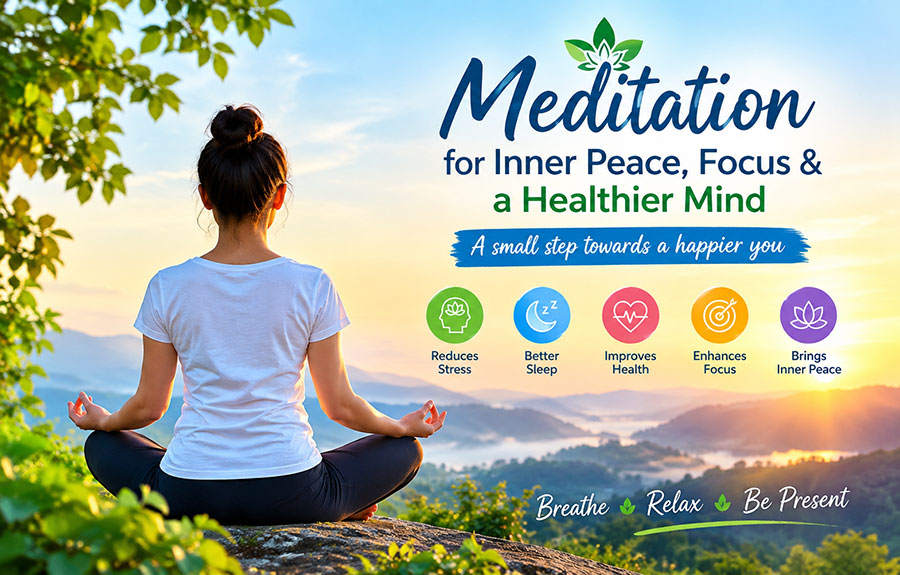
Meditation for Inner Peace, Focus & a Healthier Mind
In a busy world filled with notifications, deadlines and constant distractions, meditation offers a simple way to pause, breathe and reconnect with yourself. You do not need a special place or hours of free time to begin. Even a few quiet minutes each day can become a meaningful part of your routine.
Meditation is a practical mindfulness practice that can support calmness, focus, emotional balance and a healthier approach to everyday stress. Whether you are a complete beginner, a working professional, a student or someone looking for greater inner peace, the key is to start comfortably and practise consistently.
1. What Is Meditation?
Meditation is the practice of intentionally bringing your attention to the present moment. You may focus on your breathing, a mantra, a sound, a visual point or simply observe your thoughts without immediately reacting to them.
The goal is not to stop every thought. A more realistic goal is to notice when your mind wanders, gently return your attention and develop greater awareness of what you are experiencing.
Meditation is not about having an empty mind; it is about learning to meet your thoughts with awareness, patience and calm.
2. Why Meditation Matters in Everyday Life
Modern life can keep the mind continuously active. Work, study, family responsibilities, social media and everyday decisions can make it difficult to slow down. A regular meditation habit creates a small space in the day where you can step away from the noise and pay attention to the present moment.
For many people, this simple pause can make it easier to approach daily situations with greater patience and awareness rather than reacting immediately.
3. Benefits of Regular Meditation
Meditation is not a magic solution, but consistent practice can be a useful part of a healthy lifestyle. People practise meditation for many different reasons, including relaxation, mindfulness, concentration and emotional well-being.
- Encourages relaxation and a calmer daily routine.
- Supports mindfulness and present-moment awareness.
- Can help improve attention and concentration skills.
- Encourages more thoughtful responses to everyday situations.
- Creates time for self-reflection and personal awareness.
- Can complement healthy sleep, exercise and lifestyle habits.
4. Meditation for Beginners: Start Small
If you are new to meditation, do not feel that you need to sit for 30 or 60 minutes immediately. Start with five minutes and focus on building the habit rather than achieving a perfect session.
Choose a comfortable place, sit in a relaxed position, set a gentle timer and bring your attention to your natural breathing. When your mind wanders, notice it without judging yourself and return to the breath.
5. A Simple 5-Minute Meditation Practice
You can use this simple meditation routine almost anywhere you can sit quietly:
- Sit comfortably and allow your shoulders to relax.
- Close your eyes gently or keep your gaze soft.
- Take a few natural, comfortable breaths.
- Notice the feeling of breathing in and breathing out.
- When thoughts appear, acknowledge them and gently return to your breath.
- Continue for five minutes and finish with one slow breath before returning to your activities.
6. Mindfulness Meditation
Mindfulness means paying attention to the present moment with openness rather than immediately judging what you notice. During a mindfulness meditation, you can observe your breathing, body sensations, sounds and thoughts as they come and go.
This approach can also be used outside formal meditation. Eating a meal without scrolling on your phone, listening carefully during a conversation or taking a mindful walk are simple ways to practise present-moment awareness.
7. Breathing Meditation for Calmness
Breathing is one of the easiest anchors for meditation because it is always available. Sit comfortably and observe your natural breath without trying to force it. Notice the movement of your chest or abdomen and the sensation of air moving in and out.
If you prefer structured breathing, choose a gentle pattern that feels comfortable. Never force your breathing or continue an exercise that makes you dizzy or uncomfortable.
8. Meditation for Focus and Concentration
When attention is repeatedly pulled between messages, tabs and tasks, focusing on one thing can become difficult. Meditation can be used as a simple attention-training practice.
Choose one object of attention, such as your breath or a short mantra. Each time you notice your mind drifting, return to the chosen focus. The return itself is part of the practice.
9. Meditation for Stress Management
Meditation can give you a deliberate pause during a stressful day. Instead of immediately responding to every thought or situation, you can take a few moments to breathe, observe what is happening and then decide what needs your attention.
It works best as one part of a broader healthy routine that may include adequate sleep, regular physical activity, balanced nutrition, meaningful relationships and appropriate professional support when needed.
10. Mantra Meditation
Mantra meditation uses a word, phrase or sacred sound as a point of focus. Repeating a meaningful mantra quietly or aloud can help give the mind something simple and steady to return to.
Choose a mantra that feels personally meaningful and repeat it at a comfortable pace. The purpose is not to force thoughts away, but to develop a steady point of attention.
11. Guided Meditation
Guided meditation can be helpful when you are unsure how to begin. A teacher or recording can guide your attention through breathing, body awareness, relaxation or visualization.
Beginners may find guided sessions easier because they provide structure. As you become comfortable, you can experiment with silent meditation and discover the style that suits you best.
12. Meditation and Daily Routine
The best meditation routine is one you can realistically maintain. Some people prefer early morning, while others find a short evening session more practical. You can also meditate during a quiet break in the middle of the day.
Linking meditation to an existing habit can make consistency easier. For example, you might meditate after brushing your teeth, before starting work or after returning home.
13. Common Meditation Mistakes to Avoid
- Expecting the mind to become completely silent.
- Trying to meditate for too long from the first day.
- Judging yourself whenever your attention wanders.
- Changing techniques constantly without giving one enough time.
- Treating meditation as a replacement for necessary medical or mental-health care.
- Believing that every meditation session must feel peaceful or special.
14. How to Build a Consistent Meditation Habit
Consistency matters more than perfection. Pick a realistic duration and a time that fits your schedule. Even a short session can help you establish the habit.
Keep your meditation space simple and comfortable. Put your phone on silent, use a chair or cushion that allows you to sit comfortably and avoid making the routine unnecessarily complicated.
15. Meditation for Students and Professionals
Students can use mindfulness practices as a way to create a quiet transition before studying, while professionals may find a short meditation useful before beginning demanding work or after a busy day.
Meditation should not be viewed as a productivity competition. Its value can also come from creating healthier boundaries, improving self-awareness and giving yourself a few moments of genuine attention.
16. Meditation and Spiritual Well-Being
For many people, meditation is also connected with spirituality, prayer, devotion and self-reflection. Different traditions use different practices, including mantra, breath awareness, contemplation and silent reflection.
You can approach meditation from a spiritual, secular or personal-growth perspective. What matters is choosing a practice that is respectful of your beliefs and comfortable for you.
Frequently Asked Questions
How long should a beginner meditate?
Five to ten minutes is a practical starting point. As the habit becomes comfortable, you can gradually increase the duration if you want to.
What is the best time to meditate?
There is no single best time for everyone. Choose a time when you can practise regularly without rushing. Morning, evening or a quiet break during the day can all work.
Can I meditate if my mind keeps wandering?
Yes. Mind wandering is normal. Notice that your attention has moved and gently bring it back to your chosen focus. Returning again and again is an important part of meditation practice.
Can meditation replace professional treatment?
Meditation can complement a healthy lifestyle, but it should not replace medical or mental-health treatment prescribed or recommended by a qualified professional.
Final Thoughts
Meditation does not require perfection, expensive equipment or a complicated routine. It begins with a few quiet minutes and a willingness to pay attention to the present moment.
Start small, breathe naturally, be patient with yourself and practise consistently. Over time, meditation can become a valuable personal habit for mindfulness, inner calm, focus and a more balanced approach to everyday life.