
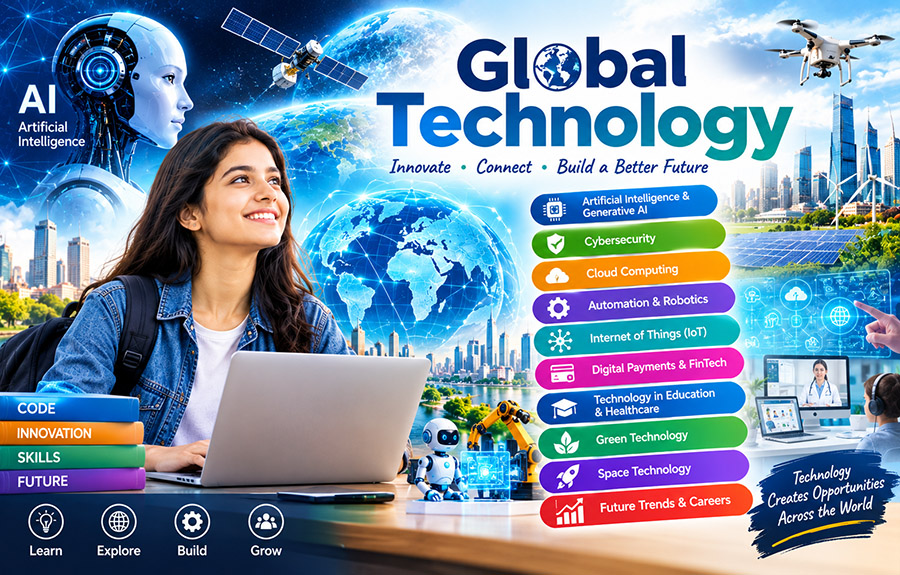
Global Technology: Innovation, AI, Digital Trends & The Future
Technology has become one of the strongest forces shaping modern life, business and society. From artificial intelligence and cloud computing to cybersecurity, robotics, digital payments and connected devices, technology is changing how people communicate, learn, work, shop, travel and solve problems.
Global technology is not only about the newest gadgets. It is about the ideas, systems and digital capabilities that help people and organisations work smarter, improve services, reach new markets and respond to changing needs. Understanding these trends can help students, professionals, businesses and everyday users make better decisions in a fast-moving digital world.
1. What Is Global Technology?
Global technology refers to technologies, digital systems and innovations that influence people and organisations across countries and markets. It includes software, hardware, artificial intelligence, telecommunications, cloud platforms, cybersecurity, automation, digital finance, biotechnology, smart devices and many other fields.
Because technology now crosses borders so easily, an innovation developed in one country can quickly influence businesses, consumers and careers around the world. This global connection is one of the defining features of the modern digital economy.
Technology is most valuable when innovation is combined with responsible use, practical problem-solving and a clear understanding of human needs.
2. Why Technology Matters in Today's World
Technology helps organisations improve productivity, communicate with customers, analyse information and create new products and services. It also gives individuals access to education, digital tools, financial services, healthcare information and global professional opportunities.
At the same time, rapid technological change creates challenges. Privacy, cybersecurity, misinformation, digital inequality, job disruption and responsible AI use require thoughtful decisions from governments, companies and individuals.
3. Artificial Intelligence and Generative AI
Artificial intelligence is one of the most influential areas of modern technology. AI systems can analyse large amounts of information, identify patterns, assist with language and images, automate repetitive tasks and support decision-making in many industries.
Generative AI has expanded the way people create and interact with technology by helping produce text, images, software code, summaries and other digital content. Its responsible use requires attention to accuracy, privacy, intellectual property, security and human oversight.
4. The Future of AI in Business
Businesses are increasingly exploring AI for customer support, marketing, research, data analysis, forecasting, software development and workflow automation. The greatest value often comes when AI supports employees rather than being treated as a simple replacement for human expertise.
Companies that adopt AI effectively need more than software. They need quality data, clear business goals, employee training, security controls and processes for reviewing AI-generated results.
5. Cloud Computing and Digital Infrastructure
Cloud computing allows organisations to access computing resources, applications and storage through internet-based infrastructure. It has made it easier for businesses to scale digital services without building every technology system from scratch.
Cloud platforms also support remote collaboration, data processing, software development and modern AI applications. As organisations move more operations online, reliability, security, cost management and data governance become increasingly important.
6. Cybersecurity in a Connected World
As more personal, financial and business information moves online, cybersecurity has become essential. Threats can include phishing, malware, ransomware, identity theft, account compromise and attacks against business infrastructure.
Good cybersecurity starts with basic habits such as strong passwords, multi-factor authentication, software updates, secure backups and careful handling of suspicious messages. Organisations also need security policies, employee awareness training, monitoring and incident-response plans.
7. Data and the New Digital Economy
Data has become an important resource for modern organisations. Businesses use data to understand customers, measure performance, identify trends and improve products and services.
However, more data also creates greater responsibility. Organisations need to protect sensitive information, follow applicable privacy rules and collect data for legitimate purposes. Good data management combines useful insights with strong governance.
8. Digital Transformation
Digital transformation is more than moving paper records onto computers. It involves redesigning processes, services and customer experiences using digital technology.
A successful transformation begins with a real business problem. Organisations should identify where technology can reduce unnecessary work, improve service quality, make information easier to access or create new value rather than adopting technology simply because it is fashionable.
9. Automation and the Changing Workplace
Automation can handle repetitive, rule-based tasks and allow employees to spend more time on activities requiring judgement, creativity, communication and problem-solving. It is already influencing manufacturing, logistics, finance, customer service, marketing and many other industries.
The future of work will likely involve people working alongside increasingly capable digital systems. Professionals who understand technology and can combine it with strong human skills will have an important advantage.
10. Robotics and Smart Machines
Robotics combines software, sensors, mechanical systems and artificial intelligence to perform physical or highly structured tasks. Robots are used in manufacturing, warehouses, healthcare research, agriculture, inspection and other specialised environments.
Smart machines can improve precision and efficiency, but their adoption requires careful planning around safety, maintenance, workforce training and the environments in which they operate.
11. Internet of Things and Connected Devices
The Internet of Things connects physical devices to networks so they can collect, exchange or respond to information. Examples include smart home equipment, industrial sensors, connected vehicles, wearable devices and intelligent infrastructure.
Connected technology can make services more efficient, but every connected device can also create security and privacy considerations. Strong authentication, secure updates and responsible data handling are important parts of IoT deployment.
12. Digital Payments and FinTech
Financial technology has transformed how many people send money, make purchases, manage accounts and access financial services. Mobile payments, digital banking, online lending platforms and other technologies have increased convenience in many markets.
Convenience must be balanced with security. Users should protect authentication information, verify payment requests and monitor accounts for suspicious activity. Businesses must also take fraud prevention and data protection seriously.
13. Technology in Education
Digital technology has expanded access to learning through online courses, educational platforms, digital libraries, virtual classrooms and interactive tools. Students can learn from institutions and educators far beyond their local communities.
The best educational technology supports learning rather than distracting from it. Teachers, students and parents should focus on useful content, critical thinking, digital responsibility and meaningful interaction.
14. Technology and Healthcare
Technology is influencing healthcare through electronic records, telemedicine, medical imaging, digital monitoring, data analysis and research tools. These technologies can improve access and support healthcare professionals when implemented responsibly.
Healthcare technology also requires particularly careful attention to privacy, security, accuracy and professional oversight because mistakes or inappropriate use of sensitive information can have serious consequences.
15. Green Technology and Sustainable Innovation
Technology can contribute to environmental goals through renewable energy systems, energy-efficient equipment, smart grids, electric mobility, improved batteries, waste-management solutions and technologies that help organisations measure resource use.
Technology itself also has an environmental footprint. Data centres, electronic devices, manufacturing and digital infrastructure require energy and resources, making efficient design, recycling and responsible consumption increasingly important.
16. Space Technology and Global Innovation
Space technology supports communication, navigation, weather observation, Earth monitoring and scientific research. Satellite-based systems have practical applications in agriculture, disaster management, transportation, mapping and connectivity.
The broader space sector is also creating new engineering, software, data and research opportunities. Advances in launch systems, satellites and space-based services are likely to remain an important part of global technological development.
17. Technology Careers and In-Demand Skills
The technology sector offers career paths in software development, data analysis, cybersecurity, cloud computing, AI, UX design, digital marketing, product management, technical support, networking and many specialised areas.
A successful technology career does not always require the same qualification or skill set. What matters is a strong foundation, practical ability, continuous learning and a portfolio that demonstrates what you can actually do.
18. Digital Skills Everyone Should Develop
Basic digital literacy is becoming essential across almost every profession. Useful skills include online research, productivity software, cybersecurity awareness, data handling, digital communication, collaboration tools and responsible use of AI.
Professionals can go further by learning skills connected to their industry. A teacher might learn educational technology, a marketer may study analytics and automation, while a business professional may benefit from data visualisation and AI-assisted workflows.
19. Challenges of Rapid Technological Change
Technology creates opportunities, but not everyone benefits equally. Access to reliable internet, devices, quality education and digital skills can differ significantly between communities and countries.
Other challenges include job displacement, algorithmic bias, misinformation, privacy concerns, cybercrime and excessive dependence on digital systems. Responsible innovation requires governments, companies, educators and users to consider these risks alongside potential benefits.
20. How to Stay Ready for the Technology Future
The fastest-changing technology is difficult to predict, so learning how to learn is one of the most valuable long-term skills. Follow reliable technology sources, experiment with useful tools, take structured courses and build practical projects.
Do not chase every new trend. Focus on technologies that solve real problems and strengthen your career or business goals. Combine technical knowledge with communication, critical thinking, creativity, ethics and adaptability.
Global Technology Trends to Watch
Several areas are likely to remain important as the digital economy develops: artificial intelligence, cybersecurity, cloud computing, robotics, advanced connectivity, digital health, green technology, automation, data platforms and immersive digital experiences.
The most useful approach is to understand what these technologies can actually do, where they create value and what risks they introduce. Technology literacy helps people make informed choices instead of simply following hype.
Frequently Asked Questions
What is global technology?
Global technology includes digital systems, innovations and technologies that influence people, businesses and societies across countries and markets.
What are the most important technology trends today?
Artificial intelligence, cybersecurity, cloud computing, automation, data, connected devices, digital finance and sustainable technology are among the major areas shaping the digital economy.
Is AI going to replace all jobs?
AI is more likely to change many tasks and job roles than simply eliminate every job. Workers who learn to use technology effectively and strengthen human skills can improve their ability to adapt.
Which technology skills are useful for careers?
Skills in AI, data, cybersecurity, cloud platforms, software, digital communication, automation and productivity tools can be valuable, depending on the career path.
How can students prepare for the technology-driven future?
Students can develop digital literacy, coding or technical skills where appropriate, practise problem-solving, learn responsible AI use, build projects and strengthen communication and teamwork.
How can businesses adopt new technology safely?
Businesses should begin with a clear problem, evaluate technology carefully, protect data, train employees, test systems, monitor results and maintain appropriate security and governance.
Final Thoughts
Global technology is changing quickly, but the central goal remains simple: use innovation to solve meaningful problems and improve people's lives. From AI and cloud computing to cybersecurity, education and green technology, digital progress is creating new possibilities across countries and industries.
The people and organisations that benefit most will not necessarily be those that adopt every new tool. They will be the ones that understand technology, question its limitations, protect people and data, and use innovation with purpose. Keep learning, stay curious and build practical digital skills—the future of technology is global, and there is room for everyone to participate.