
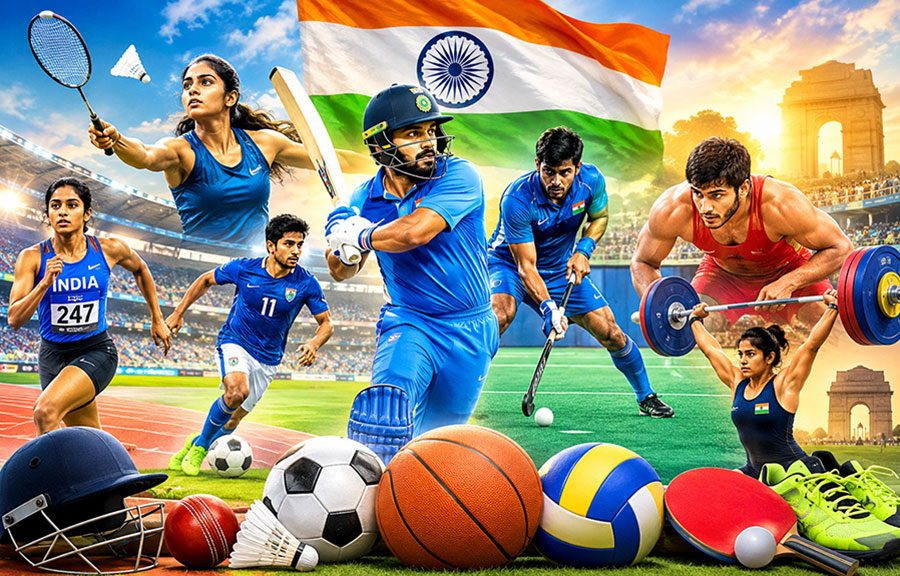
Indian Sports: From Traditional Games to Global Sporting Success
Indian sports have grown from traditional games and community competitions into a diverse sporting culture that now reaches national and global audiences. Cricket remains hugely popular, but India’s sporting identity also includes hockey, badminton, wrestling, athletics, football, shooting, boxing, archery, table tennis, weightlifting and many other disciplines.
India’s sporting journey is not only about medals and records. It is also about discipline, determination, teamwork, healthy competition and the growing opportunities available to young athletes. From local grounds and school competitions to international arenas, sport is becoming an increasingly important part of Indian life.
1. A Rich Tradition of Indian Sports
India has a long tradition of physical activities and indigenous games. Sports and games such as kabaddi, kho-kho, wrestling, mallakhamb and archery have deep cultural connections in different parts of the country.
These traditional activities continue to be played at community and competitive levels and have helped preserve an important part of India’s sporting heritage.
Indian sports are built not only on talent, but also on perseverance, discipline and the courage to keep improving.
2. Cricket and Its Special Place in India
Cricket has become one of the most followed sports in India. From school and club cricket to domestic competitions and international matches, the sport has created opportunities for players, coaches, officials, broadcasters and sports professionals.
India’s strong cricket ecosystem has also contributed to the growth of sports infrastructure, professional leagues, training academies and opportunities for young players.
3. Hockey: An Important Part of India’s Sporting Heritage
Field hockey has a special place in Indian sports history. India has produced generations of talented hockey players and has enjoyed notable success at the Olympic Games and other international competitions.
The sport continues to develop through national competitions, professional structures, improved training and greater attention to fitness and sports science.
4. Badminton and the Rise of Indian Champions
Badminton has grown rapidly in popularity across India. Indian players have achieved success in major international competitions and helped inspire a new generation of young athletes.
Better coaching, professional tournaments, training centres and wider access to the sport have supported this growth. Badminton is now one of the most visible individual sports in the country.
5. Wrestling and India’s Strong Tradition
Wrestling has a long-standing place in Indian sporting culture. Traditional akhadas and modern training centres have contributed to the development of wrestlers across different regions.
Indian wrestlers have competed successfully at major international events, including the Olympic Games and world-level championships, making wrestling an important pathway for aspiring athletes.
6. Athletics and Track-and-Field Sports
Athletics is one of the foundations of international sport, covering events such as running, jumping and throwing. Indian athletes have increasingly attracted global attention through performances at major championships and multi-sport events.
Improved facilities, specialised coaching, strength and conditioning programmes and sports science are helping athletes prepare for increasingly competitive international fields.
7. Football in India
Football has a passionate following in several parts of India and continues to attract young players. Domestic leagues, state-level competitions, grassroots academies and school programmes are creating more opportunities to develop football talent.
The continued growth of grassroots football is important because strong foundations at school and community level can help build a wider and more sustainable football ecosystem.
8. Boxing, Shooting and Archery
Indian athletes have also made their presence felt in sports such as boxing, shooting and archery. These disciplines require specialised training, concentration, technical precision and strong mental preparation.
Success by Indian competitors at international competitions has encouraged more young people to explore sports beyond the traditionally dominant disciplines.
9. India at the Olympic Games
The Olympic Games provide one of the biggest stages for Indian athletes. India has competed in the Olympics for many decades, with athletes earning medals and recognition in sports including hockey, shooting, wrestling, badminton, boxing and athletics.
Olympic performances have helped raise public interest in less widely followed sports and demonstrated the importance of long-term athlete development and professional support.
10. The Growth of Women in Indian Sports
Women athletes have become an increasingly important part of India’s sporting success. Players and competitors across badminton, boxing, wrestling, weightlifting, shooting, athletics, cricket and other disciplines have challenged expectations and inspired young girls to participate in sport.
Greater access to facilities, coaching, competitions and professional opportunities can help more women build sustainable sporting careers.
11. The Role of Sports Leagues and Professional Competitions
Professional leagues have changed the way many Indians experience and participate in sport. Cricket, football, kabaddi, badminton and other sports have developed organised competitions that connect athletes with fans, sponsors and professional opportunities.
These leagues can also support coaching, sports management, broadcasting, fitness, event operations and other careers connected with the wider sports industry.
12. Sports Infrastructure and Training
Quality sports infrastructure is essential for developing athletes. Training centres, stadiums, indoor facilities, swimming pools, athletic tracks, courts and community grounds all contribute to participation and performance.
Alongside physical infrastructure, athletes need qualified coaches, nutrition guidance, medical support, physiotherapy, sports psychology and access to modern sports science.
13. The Importance of Grassroots Sports
Grassroots sport provides the foundation for future champions. Schools, colleges, local clubs, academies and community organisations can help children discover their abilities and develop healthy sporting habits.
A strong grassroots system should encourage participation while also providing clear pathways for talented athletes who want to compete at higher levels.
14. Sports and Youth Development
Regular participation in sport can help young people develop fitness, coordination, confidence, discipline and teamwork. Competitive sport can also teach valuable lessons about preparation, handling setbacks and respecting opponents.
For children and teenagers, the goal should not be limited to winning medals. Creating a positive and safe sporting environment is equally important for long-term development.
15. Technology and Sports Science
Modern sport increasingly uses technology to improve training and performance. Video analysis, wearable devices, performance tracking, data analysis, recovery monitoring and specialised equipment can help athletes and coaches make better-informed decisions.
Sports science is also becoming more important in areas such as nutrition, injury prevention, rehabilitation, strength training and mental preparation.
16. Para Sports in India
Indian para-athletes have demonstrated remarkable determination and skill at national and international competitions. Their achievements have helped increase awareness of para sports and the importance of accessible sporting opportunities.
Better facilities, equipment, coaching and competition pathways can help create more opportunities for athletes with disabilities to participate and excel.
17. Traditional Games and Their Modern Revival
Traditional Indian games such as kabaddi and kho-kho have received renewed attention through organised competitions and professional formats. Their popularity shows how cultural sporting traditions can adapt to modern audiences.
Promoting traditional games can preserve heritage while also creating new sporting and professional opportunities.
18. Sports as a Career
Sport can offer career opportunities far beyond becoming a professional athlete. Coaching, fitness training, sports journalism, physiotherapy, sports nutrition, event management, sports marketing, broadcasting, analytics and sports administration are all growing areas.
Young people interested in sports can therefore explore both performance-based careers and the many professional roles that support the sporting ecosystem.
19. Challenges Facing Indian Sports
Despite significant progress, Indian sports still face challenges including unequal access to facilities, limited opportunities in some regions, financial barriers, pressure on young athletes and the need for stronger grassroots systems.
Addressing these challenges requires sustained investment, transparent systems, qualified coaching, athlete welfare, better facilities and opportunities that reach talented people across different communities and regions.
20. The Future of Indian Sports
The future of Indian sports looks increasingly diverse. Greater participation, professional leagues, improved infrastructure, sports science and rising international ambitions can create stronger pathways for athletes.
The long-term goal should be to build a sporting culture in which children have opportunities to participate, talented athletes receive professional support and sporting achievements are matched by education, wellbeing and career development.
Frequently Asked Questions
What are the most popular sports in India?
Cricket is widely followed, while hockey, football, badminton, kabaddi, wrestling, athletics and several other sports also have large and growing audiences.
Which Indian sports have a strong traditional connection?
Games and disciplines such as kabaddi, kho-kho, wrestling, archery and mallakhamb have longstanding connections with Indian sporting traditions.
Why is grassroots sports important?
Grassroots sport gives children opportunities to participate, develop basic skills and discover talent while building healthier and more active communities.
How is technology changing Indian sports?
Video analysis, performance data, wearable technology, sports science and modern recovery methods are helping athletes and coaches improve training and performance.
Can sports be a career beyond professional playing?
Yes. Sports can lead to careers in coaching, fitness, physiotherapy, nutrition, journalism, marketing, broadcasting, analytics, event management and sports administration.
Why are women’s sports important for India?
Women athletes expand India’s sporting talent pool, inspire young participants and help create a more inclusive and representative sports culture.
Final Thoughts
Indian sports represent a powerful combination of tradition, talent, ambition and changing opportunities. From local playgrounds and traditional games to Olympic arenas and professional leagues, sport continues to evolve across the country.
India’s next generation of sporting success will depend not only on exceptional athletes, but also on strong grassroots programmes, quality coaching, modern facilities, athlete welfare and sustained support for a wide range of sports.