
Religion in India: Faith, Traditions, Festivals & Spiritual Heritage
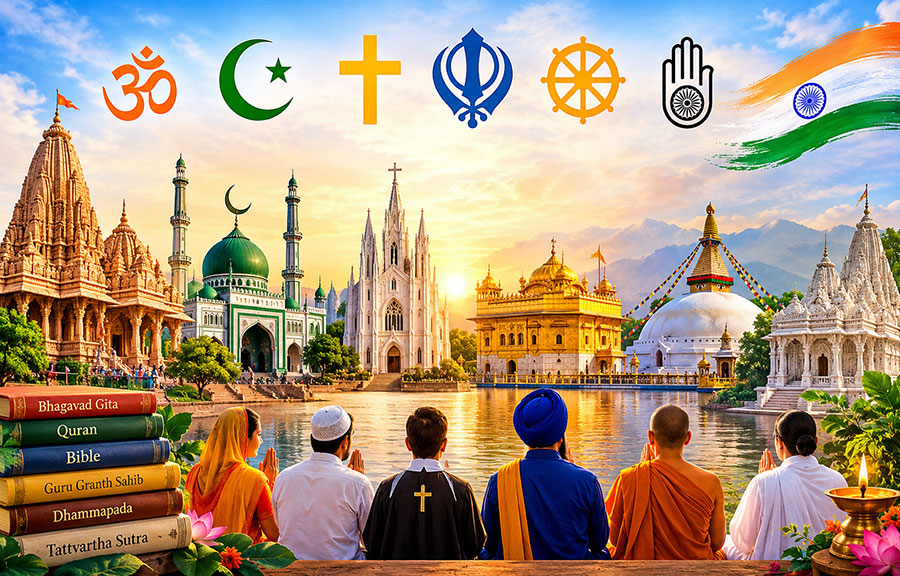
Religion in India is closely connected with the country’s history, culture, traditions, art, festivals and everyday life. India is home to people who follow different faiths and spiritual paths, and this diversity has shaped communities and cultural traditions across generations.
From ancient temples and Buddhist monasteries to mosques, churches, gurdwaras and Jain places of worship, India’s religious landscape reflects a long and varied history. This guide offers a simple, respectful introduction to religion in India and the traditions that continue to influence Indian society.
1. Understanding Religion in India
India has a long history of religious and philosophical thought. Hinduism, Buddhism, Jainism and Sikhism originated in the Indian subcontinent, while Islam, Christianity, Judaism, Zoroastrianism and other traditions have also become important parts of India’s social and cultural landscape.
Religious practice can differ significantly between regions, communities and families. For many people, religion may include prayer, meditation, festivals, pilgrimage, service, ethical living, family traditions or study of sacred texts.
India’s spiritual heritage is diverse, and understanding that diversity begins with respect, curiosity and willingness to learn.
2. Hinduism and Its Diverse Traditions
Hinduism is one of the world’s oldest living religious traditions and has developed through many philosophical schools, texts, customs and forms of worship. Important scriptures and traditions include the Vedas, Upanishads, Bhagavad Gita, Ramayana and Mahabharata.
Worship may take different forms, including puja, prayer, meditation, pilgrimage, devotional singing and observance of festivals. Traditions associated with deities such as Vishnu, Shiva, Devi, Ganesha, Hanuman and Krishna are followed in many parts of India.
3. Islam in India
Islam has been part of India’s history for many centuries and has contributed to the country’s architecture, literature, music, food traditions and cultural life. Indian Muslims follow diverse schools and regional traditions.
Important practices include daily prayer, fasting during Ramadan, charity and community worship. Mosques and dargahs in different parts of India are also significant religious and cultural landmarks.
4. Christianity in India
Christian communities are found across India, with established traditions in states and regions including Kerala, Goa, Tamil Nadu, the Northeast and many major cities. Indian Christianity includes different denominations and local cultural expressions.
Churches, Christmas and Easter celebrations, community service and educational institutions are among the visible parts of Christian life in India.
5. Sikhism and the Tradition of Seva
Sikhism originated in the Punjab region and is associated with the teachings of the Sikh Gurus and the Guru Granth Sahib. Sikh traditions emphasise devotion, honest work, equality, remembrance of God and service to others.
Gurdwaras are important community spaces. The tradition of langar, where food is served to people without discrimination, is widely recognised as an expression of community service and equality.
6. Buddhism and India’s Spiritual Heritage
Buddhism originated in India through the teachings of Gautama Buddha. His life and teachings are associated with important places such as Bodh Gaya, Sarnath, Kushinagar and Lumbini in the wider Buddhist heritage of the region.
Today, Buddhist communities and visitors connect with India through monasteries, meditation centres, pilgrimage sites and Buddhist cultural traditions.
7. Jainism and Its Emphasis on Non-Violence
Jainism is an ancient Indian religious tradition known for its strong emphasis on ahimsa, or non-violence, along with ethical discipline, self-control and compassion toward living beings.
Jain temples and pilgrimage centres across India reflect the architectural, artistic and spiritual heritage of Jain communities. Teachings associated with the Tirthankaras remain central to Jain religious life.
8. Major Religious Festivals in India
Religious festivals are an important part of Indian cultural life. Festivals may involve prayer, fasting, family gatherings, processions, music, food, charity and community activities.
- Diwali: Celebrated in different ways across communities and regions, with traditions involving lights, worship and family gatherings.
- Holi: Known widely as the festival of colours and associated with several cultural and religious traditions.
- Navratri and Durga Puja: Celebrated with devotion, worship, cultural programmes and community gatherings in many regions.
- Janmashtami: Observed by devotees in connection with the birth of Lord Krishna.
- Ram Navami: Associated with the birth of Lord Rama and observed through prayer and religious programmes.
- Eid: Major Islamic festivals marked by prayer, family gatherings, charity and community celebrations.
- Christmas: Celebrated by Christians across India with church services, family gatherings and community traditions.
- Guru Nanak Gurpurab: Observed by Sikhs in remembrance of Guru Nanak Dev Ji.
- Buddha Purnima: Observed by Buddhists in remembrance of Gautama Buddha.
- Mahavir Jayanti: Celebrated by Jains in remembrance of Lord Mahavira.
9. Famous Religious Places in India
India has numerous places of worship and pilgrimage that are important to different religious communities. These sites are also significant for architecture, history, art and local traditions.
- Varanasi and the temples along the Ganga
- Ayodhya and its Ramayana-related traditions
- Mathura and Vrindavan associated with Krishna traditions
- Haridwar and Rishikesh, known for pilgrimage and spiritual practices
- Amritsar and the Golden Temple
- Bodh Gaya and the Mahabodhi Temple
- Ajmer Sharif and its long-standing Sufi tradition
- Velankanni and other important Christian pilgrimage destinations
- Major Jain pilgrimage centres including Palitana and Shravanabelagola
10. Pilgrimage and Tirth Yatra
Pilgrimage, or tirth yatra, is an important practice for many Indian religious communities. People may travel to sacred rivers, temples, mountains, monasteries, mosques, churches, gurdwaras or other holy places for prayer, reflection and spiritual observance.
Pilgrimage can also bring together people from different regions and preserve local customs, traditional arts, food and stories.
11. The Role of Sacred Texts
Sacred texts play different roles across religious traditions. They may provide spiritual teachings, ethical guidance, philosophical ideas, historical narratives, devotional practices and reflections on human life.
Examples connected with India’s religious heritage include the Bhagavad Gita, Upanishads, Ramayana, Guru Granth Sahib, Buddhist scriptures, Jain Agamas, the Quran and the Bible. Each tradition has its own history, interpretation and practices.
12. Religion, Culture and Indian Daily Life
Religion and culture often overlap in India. Clothing, food, music, dance, architecture, family customs, names, ceremonies and community events may have religious or spiritual influences.
At the same time, India’s communities are diverse, and people may interpret or practise traditions differently. A respectful understanding avoids assuming that one practice represents every member of a faith.
13. Respecting Religious Diversity
India’s religious diversity makes respectful communication especially important. Learning about another faith does not require adopting its beliefs. It simply helps us understand the people, traditions and communities around us.
When discussing religion, it is useful to distinguish between established religious teachings, regional customs, family practices and individual beliefs. Listening respectfully can help reduce misunderstandings and encourage peaceful coexistence.
14. Spirituality and Personal Reflection
For some people, spirituality is expressed through formal religious practice. For others, it may involve meditation, prayer, self-reflection, service, gratitude or time spent in nature. These experiences can be deeply personal.
India has a long tradition of philosophical inquiry into questions about life, duty, consciousness, ethics and the nature of the self. Different schools offer different answers, making Indian spiritual thought a broad and diverse field of study.
15. Religion and the Idea of Seva
Service to others is valued in several Indian religious traditions. Seva may take the form of feeding people, helping during difficult times, supporting community institutions, volunteering or assisting people in need.
Community service can become a practical expression of compassion and responsibility, bringing spiritual values into everyday life.
Frequently Asked Questions
What are the major religions in India?
India is home to followers of Hinduism, Islam, Christianity, Sikhism, Buddhism, Jainism and several other religious and spiritual traditions.
Which religions originated in India?
Hinduism, Buddhism, Jainism and Sikhism are major religious traditions that originated in the Indian subcontinent.
Why are religious festivals important in India?
Religious festivals can be occasions for worship, family gatherings, community participation, cultural expression, charity and the continuation of traditional practices.
What is a pilgrimage in Indian religions?
A pilgrimage is a journey to a place considered spiritually or religiously significant. Different faiths have their own pilgrimage traditions and sacred destinations.
How can we learn about different religions respectfully?
Use reliable sources, learn the beliefs and history of each tradition in context, avoid stereotypes and recognise that practices can vary among individuals and communities.
Final Thoughts
Religion in India is not a single story. It is a broad and evolving part of the country’s history and cultural life, shaped by many faiths, philosophies, communities and regional traditions.
Understanding this diversity can help us appreciate India’s temples, mosques, churches, gurdwaras, monasteries, festivals, literature and spiritual traditions while recognising the different beliefs and practices of the people who follow them.