
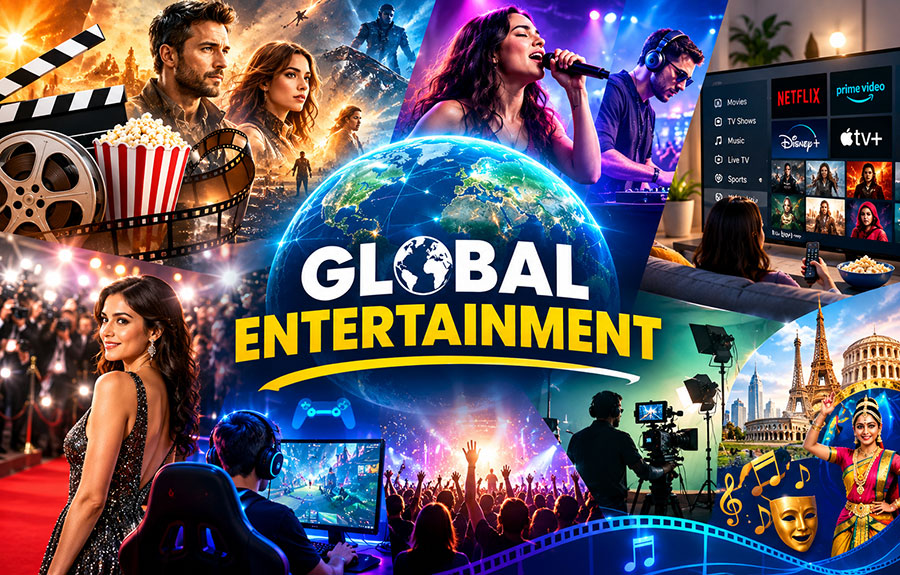
Global Entertainment: Movies, Music, Streaming, Culture & The Future
Entertainment is one of the most powerful ways people connect with stories, ideas, music and culture. From blockbuster films and global music releases to streaming platforms, television, gaming, live events and creator-led content, the entertainment industry reaches audiences across borders every day.
Global entertainment is no longer shaped only by traditional studios, television networks and record labels. Streaming, social media, short-form video, digital creators, gaming communities and new production technologies have changed how content is made, discovered and enjoyed. For audiences and professionals alike, understanding these changes helps explain where modern entertainment is heading.
1. What Is Global Entertainment?
Global entertainment includes films, television, music, streaming content, theatre, live performances, gaming, digital media, celebrity culture and other forms of creative content that reach audiences across countries and regions.
A story created in one market can now find viewers or listeners around the world within hours. This global reach has created new opportunities for creators while also making competition for audience attention more intense.
Great entertainment does more than fill our free time; it gives people stories, emotions and experiences they can share across cultures.
2. Why Entertainment Matters in Modern Life
Entertainment provides relaxation, inspiration, cultural expression and social connection. Films can introduce audiences to unfamiliar experiences, music can cross language barriers, and live events can create memorable shared moments.
The industry also supports millions of creative and technical roles, including writers, actors, musicians, editors, designers, producers, marketers, technicians, developers and digital professionals.
3. Movies and the Global Film Industry
Movies remain a major part of global entertainment, with film industries across North America, Europe, Asia, Africa, Latin America and other regions producing distinctive stories and creative styles. International audiences increasingly discover films beyond their own language and country.
Subtitles, dubbing, global distribution and streaming platforms have made cross-border viewing easier. Local stories can become international successes when strong storytelling connects with audiences.
4. The Rise of Streaming and OTT Platforms
Streaming has transformed how people watch movies, series, documentaries and other video content. Instead of depending entirely on traditional broadcast schedules, viewers can choose what to watch and often access content across multiple devices.
The shift toward streaming has also changed the business of entertainment. Platforms compete through original productions, licensing, recommendations, user experience and global content libraries, while creators and studios explore new ways to reach audiences directly.
5. Television in the Digital Age
Television remains influential, but the way people consume TV content continues to evolve. Traditional broadcasters now compete and collaborate with streaming services, connected-TV platforms and digital publishers.
Successful television content increasingly needs to work across multiple viewing habits. A popular series may attract audiences through broadcast television, on-demand streaming, social clips and online communities at the same time.
6. Global Music and the Changing Music Industry
Music has become more global than ever. Artists can release songs to listeners in many countries without relying entirely on traditional physical distribution. Streaming services, social platforms and international collaborations have helped new sounds reach wider audiences.
At the same time, musicians must think about discoverability, fan engagement, live performances, digital rights and sustainable income. Building a long-term music career now often involves both creative talent and digital strategy.
7. Social Media and Digital Creators
Social media has created a new generation of entertainers who build audiences through short videos, podcasts, livestreams, commentary, comedy, education and lifestyle content. Many creators can communicate directly with followers without traditional media gatekeepers.
This creator economy has changed marketing as well. Brands increasingly work with creators whose communities trust their recommendations, while creators must balance authenticity, audience expectations, commercial partnerships and platform rules.
8. Celebrity Culture and Personal Branding
Actors, musicians, athletes, creators and other public figures can now communicate with audiences directly through social platforms. Personal branding has therefore become an important part of modern entertainment.
However, visibility also brings responsibility. Public figures need to manage privacy, online reputation, misinformation and the pressure of constant public attention. A strong personal brand is built through consistency, credibility and meaningful audience connection.
9. Gaming as a Global Entertainment Industry
Gaming has grown into a major form of entertainment spanning consoles, PCs, mobile devices and online platforms. Games combine storytelling, competition, social interaction, design and technology in ways that can attract audiences for many years.
Gaming communities also extend beyond playing. Esports, livestreaming, game development, online events and gaming content have created new careers and business models within the wider entertainment ecosystem.
10. Esports and Competitive Entertainment
Esports has developed a global audience around competitive video games, professional teams, tournaments and livestreamed events. Like traditional sports, esports involves training, strategy, coaching, sponsorship, media rights and dedicated fan communities.
The sector continues to evolve as organisers, platforms and game publishers explore sustainable competition structures and better experiences for players and audiences.
11. Live Events, Concerts and Performing Arts
Live entertainment offers something digital content cannot completely reproduce: the shared experience of being present with other people. Concerts, theatre, comedy shows, festivals and cultural performances continue to attract audiences around the world.
Technology is enhancing these experiences through digital ticketing, immersive screens, improved sound, mobile engagement and new production techniques. Yet the emotional connection between performers and audiences remains central.
12. Artificial Intelligence in Entertainment
Artificial intelligence is increasingly being explored for areas such as content discovery, recommendation systems, production workflows, visual effects, dubbing, editing, marketing and audience analytics.
AI also raises important questions about creativity, consent, copyright, performers' rights, transparency and the responsible use of creative work. Human judgement remains essential when technology is used in storytelling and media production.
13. Virtual Production and New Creative Technology
Virtual production, real-time graphics, advanced visual effects and digital environments are changing how some films, series, advertisements and live experiences are produced. These tools can give creative teams greater flexibility while reducing some traditional production limitations.
The most effective use of technology does not replace storytelling. It gives writers, directors, designers and production teams more ways to bring ideas to life.
14. Global Entertainment and Cultural Exchange
Entertainment can introduce audiences to languages, traditions, fashion, food, music and social experiences from other parts of the world. International popularity of regional cinema, music and television demonstrates how strongly audiences can respond to authentic local stories.
Cultural exchange works best when creators are respected for their original voices rather than being pressured to make every story look the same. Diversity can be a creative strength in global entertainment.
15. Representation and Diversity in Entertainment
Audiences increasingly want to see a wide range of people, communities and experiences represented on screen and in other creative formats. Better representation can help audiences feel recognised while giving creators opportunities to tell stories that may previously have received less attention.
Meaningful diversity is about more than visibility. It also includes opportunities behind the camera, in writing rooms, production teams, leadership roles and creative decision-making.
16. The Business of Global Entertainment
Entertainment is a large global business involving production, distribution, advertising, subscriptions, licensing, merchandising, live events, sponsorships and intellectual property. Success depends on both creative quality and sustainable business models.
Digital distribution has lowered some barriers to reaching audiences, but it has also increased competition. Companies must understand audience behaviour, manage costs and invest in content that can build lasting value.
17. Entertainment Marketing and Audience Engagement
Modern entertainment marketing goes far beyond posters and television advertisements. Trailers, social media campaigns, creator partnerships, fan communities, behind-the-scenes content and interactive experiences can all help build interest before and after a release.
The strongest campaigns understand the audience rather than simply producing more promotional content. Relevance, timing, creativity and genuine engagement can make a major difference.
18. The Importance of Copyright and Digital Rights
Creative work depends on intellectual property rights. Films, songs, scripts, photographs, artwork, games and digital videos are valuable creative assets that require appropriate protection and licensing.
Audiences can support creators by using legitimate platforms and respecting copyright. Businesses and creators should also understand licensing terms before using music, images, video or other protected material.
19. The Future of Global Entertainment
The future of entertainment will likely combine streaming, social media, gaming, live experiences, interactive storytelling and increasingly sophisticated creative technology. Audiences will continue to expect convenient access and personalised discovery while still looking for stories that feel meaningful and authentic.
Technology will keep changing the tools, but creativity will remain the foundation. Strong characters, memorable music, compelling stories and genuine human experiences are difficult to replace.
20. Entertainment Careers and Creative Skills
The global entertainment industry offers careers in acting, writing, filmmaking, music, animation, editing, production, graphic design, photography, sound, marketing, public relations, gaming, software and digital content creation.
Creative professionals can strengthen their opportunities by combining artistic ability with practical digital skills. Communication, collaboration, project management, audience understanding and continuous learning are valuable across many entertainment roles.
Global Entertainment Trends to Watch
Important areas to watch include streaming and connected television, creator-led media, global music discovery, gaming and esports, immersive experiences, AI-assisted production, virtual production, international content partnerships and new forms of audience participation.
The biggest opportunities may come from the combination of creative storytelling and accessible technology. People who understand both sides can help shape the next generation of global entertainment.
Frequently Asked Questions
What is global entertainment?
Global entertainment includes movies, music, television, streaming, gaming, live events, digital content and other creative experiences that reach audiences across countries and cultures.
How has streaming changed entertainment?
Streaming has made on-demand content easier to access and has changed how audiences discover, watch and pay for movies, series and other video content.
Why is global music becoming more diverse?
Digital platforms, social media and easier international distribution allow artists from different countries to reach listeners beyond their traditional local markets.
Are digital creators part of the entertainment industry?
Yes. Creators who produce videos, podcasts, livestreams, comedy, commentary and other digital content have become an important part of modern entertainment.
How is AI affecting entertainment?
AI is being explored for recommendations, editing, visual effects, production workflows, marketing and other tasks, while also creating important discussions about copyright, consent and creative rights.
What skills are useful for entertainment careers?
Creative ability, communication, storytelling, digital production, editing, marketing, technology, collaboration and audience understanding can all be valuable depending on the career path.
Final Thoughts
Global entertainment is changing rapidly, but its central purpose remains familiar: to tell stories, create emotions and bring people together. Movies, music, streaming, gaming, live events and digital creators are opening new ways for audiences to experience culture and creativity.
The future will belong to creators and organisations that combine innovation with originality, respect audiences and protect creative work. Whether you are a viewer, music lover, gamer, creator or entertainment professional, staying curious and understanding the changing digital landscape can help you make the most of this exciting global industry.