
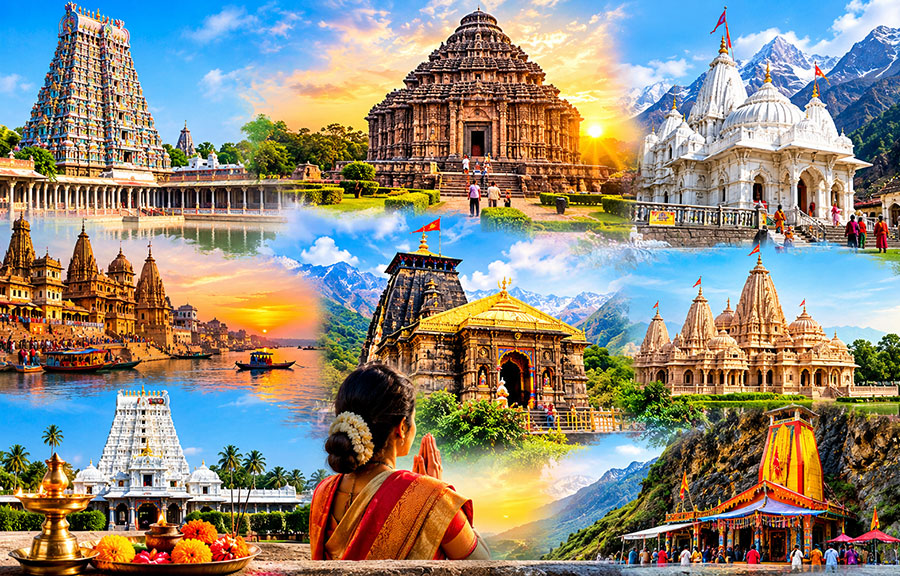
Famous Temples of India: Spirituality, History & Architectural Heritage
India is home to thousands of temples, each reflecting a unique combination of faith, history, architecture, art and local traditions. From ancient pilgrimage centres to magnificent temple complexes, these sacred places have shaped India’s cultural landscape for centuries.
Famous temples of India attract pilgrims, history enthusiasts, architecture lovers and travellers from around the world. Beyond their religious importance, many temples are living heritage sites where festivals, rituals, music, sculpture, food traditions and community life continue to connect the past with the present.
1. Kedarnath Temple, Uttarakhand
Kedarnath Temple is one of the most revered pilgrimage sites in the Himalayas and an important destination in the Char Dham tradition of Uttarakhand. The temple is dedicated to Lord Shiva and is located in a dramatic mountain setting near the Mandakini River.
The journey to Kedarnath is known for its demanding terrain and powerful spiritual atmosphere. Its Himalayan location, historic traditions and association with Shiva make it one of India’s best-known pilgrimage destinations.
India’s temples are more than places of worship; they are living expressions of faith, craftsmanship, history and community.
2. Badrinath Temple, Uttarakhand
Badrinath Temple is dedicated to Lord Vishnu and is one of the important pilgrimage centres in the Himalayan region. It is traditionally associated with the Char Dham pilgrimage and attracts devotees during the temple’s annual opening season.
Located along the Alaknanda River, Badrinath combines a powerful spiritual tradition with the distinctive natural beauty of the Himalayas.
3. Kashi Vishwanath Temple, Varanasi
Kashi Vishwanath Temple in Varanasi is one of the most important Shiva temples in India. Varanasi itself has a deep association with Hindu pilgrimage, learning, rituals and the sacred Ganga.
The temple and the surrounding city form an important part of India’s spiritual heritage. Visitors often experience the wider atmosphere of Varanasi through its ghats, rituals, lanes, music and long-standing religious traditions.
4. Somnath Temple, Gujarat
Somnath Temple stands on the Arabian Sea coast in Gujarat and is traditionally regarded as one of the twelve Jyotirlinga shrines dedicated to Lord Shiva. The temple has a long and complex history of reconstruction and renewal.
Its coastal location, architectural character and historical significance make Somnath an important destination for both pilgrims and heritage travellers.
5. Tirumala Venkateswara Temple, Andhra Pradesh
The Tirumala Venkateswara Temple, commonly associated with Tirupati, is one of the most visited and prominent pilgrimage centres in India. The temple is dedicated to Lord Venkateswara, a form of Vishnu.
The pilgrimage is known for its large-scale organisation, devotional traditions and charitable activities. The Tirumala hills and the temple complex attract devotees throughout the year.
6. Jagannath Temple, Puri, Odisha
Jagannath Temple in Puri is one of the most important pilgrimage sites in Odisha and is closely associated with the Jagannath tradition. The temple is especially famous for the annual Rath Yatra, when large chariots carry the deities through the streets of Puri.
The temple’s rituals, food traditions, festivals and distinctive Kalinga architectural heritage make it an important part of India’s religious and cultural identity.
7. Meenakshi Amman Temple, Madurai
Meenakshi Amman Temple in Madurai is celebrated for its enormous temple complex, colourful towers, detailed sculptures and rich artistic traditions. The temple is dedicated to Goddess Meenakshi and Lord Sundareswarar.
The gopurams and sculptural details demonstrate the extraordinary craftsmanship associated with South Indian temple architecture. The temple remains an important centre of worship and cultural activity.
8. Brihadeeswarar Temple, Thanjavur
Brihadeeswarar Temple in Thanjavur is one of the outstanding monuments of Chola architecture. Built under the Chola ruler Rajaraja I, the temple is dedicated to Lord Shiva and is recognised for its monumental scale and architectural precision.
Its stone construction, towering vimana and sculptural traditions make it an important destination for visitors interested in South Indian history, architecture and heritage.
9. Konark Sun Temple, Odisha
The Konark Sun Temple is a celebrated monument dedicated to the Sun God and is designed in the form of a monumental chariot. Its stone wheels, sculptural decoration and architectural planning are among the most recognisable examples of India’s historic temple art.
Although the temple is no longer an active centre of worship in the same way as many living temples, it remains an important heritage destination and a remarkable example of medieval Indian architecture.
10. Ramanathaswamy Temple, Rameswaram
Ramanathaswamy Temple in Rameswaram, Tamil Nadu, is one of the important pilgrimage centres associated with Lord Shiva and is traditionally connected with the Ramayana tradition. It is also one of the Char Dham pilgrimage destinations.
The temple is particularly famous for its long corridors, massive pillars and sacred water sources known as theerthams, which form an important part of the pilgrimage experience.
11. Akshardham Temple, Delhi
Akshardham in Delhi is a modern temple and cultural complex known for its detailed stone craftsmanship, exhibitions, gardens and presentation of Indian spiritual and cultural traditions.
Its architecture draws inspiration from traditional Indian design while the wider complex uses modern visitor facilities to present stories, values and cultural themes to a contemporary audience.
12. Mahakaleshwar Temple, Ujjain
Mahakaleshwar Temple in Ujjain is one of the twelve Jyotirlinga shrines of Lord Shiva. Ujjain has been an important centre of pilgrimage and religious learning for centuries and is also associated with major Hindu festivals.
The temple is known for its distinctive rituals and its place within the spiritual landscape of Ujjain. The city’s other sacred sites add to its importance as a pilgrimage destination.
13. Dwarkadhish Temple, Dwarka
Dwarkadhish Temple in Gujarat is dedicated to Lord Krishna and is traditionally associated with the ancient city of Dwarka. It is an important pilgrimage destination and one of the Char Dham sites.
The temple’s traditional architecture, flag ceremony and connection with Krishna traditions make it a memorable destination for devotees and visitors exploring Gujarat’s religious heritage.
14. Vaishno Devi Temple, Jammu and Kashmir
The Vaishno Devi shrine is one of India’s most important pilgrimage destinations dedicated to the Goddess. The shrine is located in the Trikuta hills and is reached through a pilgrimage route followed by millions of devotees.
The journey itself is an important part of the experience, combining physical effort, devotion and the natural landscape of the surrounding mountains.
15. Golden Temple, Amritsar
The Golden Temple, or Sri Harmandir Sahib, in Amritsar is the central spiritual site of Sikhism. Surrounded by the sacred Amrit Sarovar, the shrine is known for its striking architecture, devotional atmosphere and tradition of community service.
The langar, or community kitchen, reflects the principle of equality and service by providing meals to visitors regardless of background. The complex is also an important symbol of Sikh history and heritage.
16. Akshardham Temple, Gandhinagar
The Akshardham complex in Gandhinagar, Gujarat, is known for its traditional stone architecture, gardens and cultural presentations. It provides visitors with an opportunity to explore spiritual themes alongside Indian art and craftsmanship.
The complex demonstrates how contemporary religious and cultural centres can use traditional architectural ideas to create spaces for worship, learning and reflection.
17. Lingaraj Temple, Bhubaneswar
Lingaraj Temple is one of the major historic temples of Bhubaneswar and an important example of Kalinga temple architecture. Dedicated primarily to Lord Shiva, the temple reflects the artistic and religious traditions that developed in Odisha.
Bhubaneswar is often associated with a rich collection of historic temples, making the city an important destination for anyone interested in Indian architectural heritage.
18. Khajuraho Temples, Madhya Pradesh
The Khajuraho group of temples is renowned for its detailed stone carvings, architectural planning and artistic expression. Built primarily between the 9th and 11th centuries, the surviving temples represent an important chapter of medieval Indian art.
The sculptures depict religious themes, everyday life, musicians, dancers and a wide range of human experiences. Khajuraho is recognised internationally as an important heritage destination.
19. Virupaksha Temple, Hampi
Virupaksha Temple in Hampi is an active Hindu temple within the historic landscape of the former Vijayanagara capital. The temple is dedicated to Lord Virupaksha, a form of Shiva, and remains an important place of worship.
The surrounding ruins, monumental structures and landscape make Hampi a unique destination where living religious traditions exist alongside major archaeological heritage.
20. Why Indian Temples Matter Today
Indian temples connect religious practice with architecture, sculpture, music, festivals, food traditions, local economies and community life. Many are not simply monuments; they remain active spaces where generations continue to participate in rituals and celebrations.
Temple heritage also supports cultural tourism and provides opportunities to understand regional craftsmanship, historical traditions and the diversity of India’s spiritual landscape.
Temple Architecture Across India
India does not have a single temple architecture style. The Nagara traditions are strongly associated with northern and central India, while Dravidian architecture is especially prominent in the south. Kalinga architecture developed distinctive forms in Odisha, while many regions developed their own local expressions.
Temple design can include towers, domes or shikharas, gopurams, mandapas, sanctums, courtyards and detailed sculpture. Materials and artistic techniques vary greatly according to geography, period and local traditions.
Temple Festivals and Living Traditions
Festivals are an important part of temple culture. Rath Yatra in Puri, celebrations associated with Shiva, Krishna and Devi traditions, and numerous regional festivals bring communities together through processions, music, prayer, food and cultural performances.
These celebrations help preserve traditions while allowing younger generations to participate in cultural practices that have developed over many centuries.
Temple Tourism and Responsible Travel
Temple tourism can provide meaningful cultural experiences when visitors approach sacred places with respect. Dress codes, photography restrictions, queues, footwear rules and other local practices should be followed carefully.
Visitors can also support local communities by choosing responsible travel services, respecting heritage structures, avoiding litter and learning about the history and traditions of the places they visit.
Frequently Asked Questions
Which are some of the most famous temples in India?
Kedarnath, Badrinath, Kashi Vishwanath, Somnath, Tirupati, Jagannath Puri, Meenakshi Temple, Brihadeeswarar Temple, Mahakaleshwar and Dwarkadhish are among India’s well-known pilgrimage and temple destinations.
What is the importance of the Char Dham?
The Char Dham tradition refers to four major pilgrimage destinations: Badrinath in the north, Dwarka in the west, Puri in the east and Rameswaram in the south.
What are Jyotirlinga temples?
Jyotirlingas are twelve revered Shiva shrines recognised in Hindu tradition. Temples such as Somnath and Mahakaleshwar are among the traditionally recognised Jyotirlinga sites.
Why is temple architecture important in India?
Temple architecture preserves knowledge of historical construction, sculpture, design, religious traditions and regional craftsmanship. It is an important part of India’s tangible and living heritage.
Are all famous temples only places of worship?
No. Many temples also function as centres of festivals, music, art, community service, education, heritage and local cultural traditions.
What should tourists remember when visiting temples?
Visitors should respect local customs, dress appropriately, follow temple rules, protect heritage structures, avoid littering and be mindful that these are active sacred spaces.
Final Thoughts
The famous temples of India tell a remarkable story of faith, craftsmanship, history and community. From Himalayan shrines and coastal temples to grand South Indian complexes and historic monuments, every region adds its own character to India’s spiritual heritage.
Exploring these temples can be more meaningful when we look beyond photographs and monuments and learn about the traditions, people, architecture and history that continue to give these places their living identity.