
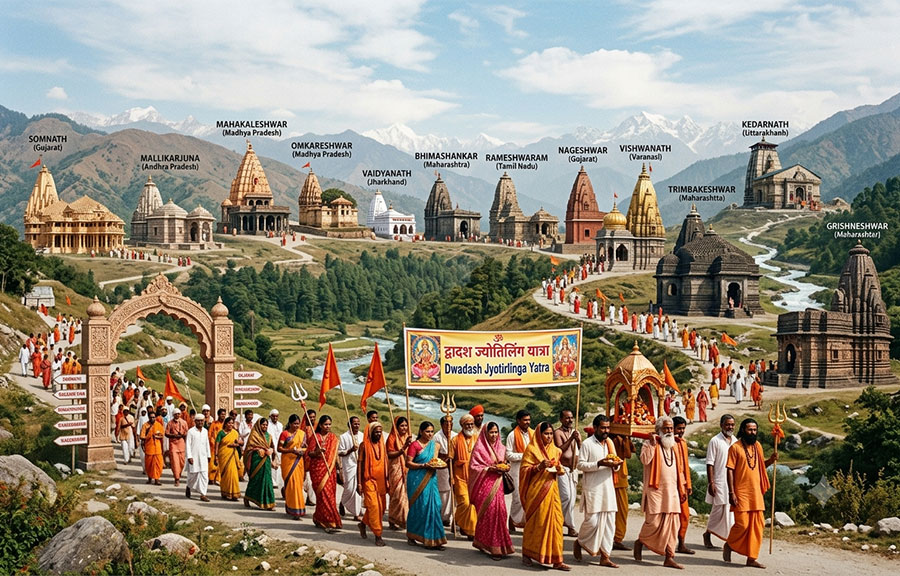
12 Jyotirlinga Yatra Guide 2026: Names, Locations, Route and Essential Travel Tips
The 12 Jyotirlinga Yatra is a sacred pilgrimage for devotees of Lord Shiva, connecting twelve revered shrines spread across different regions of India. The word Jyotirlinga is traditionally understood as a “linga of light” — a symbol of Shiva’s infinite and timeless presence. For many pilgrims, visiting these temples is not simply about covering destinations; it is a chance to pray, learn about India’s spiritual heritage and experience the distinctive culture of each region.
Because the shrines are spread across a vast area, the journey needs thoughtful planning. There is no single practical route that suits every traveller, and completing all twelve in one trip can require considerable time, budget and energy. This guide introduces the traditional list, explains where each temple is located and shares useful ways to plan a comfortable, respectful pilgrimage. Temple schedules, access rules and transport services can change, so confirm details with the relevant official temple or tourism authority before departure.
What Are the 12 Jyotirlingas?
In Hindu tradition, twelve Shiva shrines are especially honoured as Jyotirlingas. The names are recited in devotional prayers and are associated with stories, local traditions and centuries of worship. The locations below follow a widely used traditional list. In a few cases, different regional traditions identify the location of a Jyotirlinga differently, so pilgrims may encounter more than one interpretation while researching the yatra.
1. Somnath Jyotirlinga — Gujarat
Located at Prabhas Patan near Veraval, Somnath stands close to the Arabian Sea. The temple’s coastal setting, devotional atmosphere and long history make it a memorable place to begin or end a western India pilgrimage. Many visitors plan time for darshan as well as the surrounding temple precincts and the sea-facing landscape.
Planning tip: Check the official Somnath temple website for current darshan arrangements, aarti schedules and any ticketed programmes before travelling.
2. Mallikarjuna Jyotirlinga — Srisailam, Andhra Pradesh
Mallikarjuna is situated at Srisailam in the Nallamala Hills. The temple is deeply revered and is part of a larger pilgrimage setting associated with Lord Shiva and Goddess Bhramaramba. The hill route and local transport can influence journey time, especially during festivals and busy weekends.
Planning tip: Allow enough time for the approach road and check the temple administration’s current darshan and accommodation information.
3. Mahakaleshwar Jyotirlinga — Ujjain, Madhya Pradesh
Mahakaleshwar is one of Ujjain’s most prominent sacred sites, set in a city known for its religious traditions and the Shipra River. The temple’s rituals draw large numbers of devotees, and some special darshan arrangements may require advance planning. The city also offers other places of spiritual and historical interest.
Planning tip: If you hope to attend a special ritual, read the official temple rules carefully and book only through authorised channels. Do not assume that a special darshan slot is included with ordinary entry.
4. Omkareshwar Jyotirlinga — Madhya Pradesh
Omkareshwar is located on Mandhata Island in the Narmada River region. Its river scenery and sacred landscape create a different experience from the larger urban temples. Visitors often combine darshan with time to explore the island and nearby pilgrimage areas, depending on the conditions and their schedule.
Planning tip: Confirm local transport, bridge or boat access and any weather-related changes before setting out for the temple.
5. Kedarnath Jyotirlinga — Uttarakhand
Kedarnath stands high in the Garhwal Himalayas and is among the most physically demanding of the twelve shrines to reach. The journey involves high altitude, cold conditions and a substantial approach from the designated roadhead. Access is seasonal and is managed according to local weather, route conditions and official arrangements.
Planning tip: Check the official Uttarakhand pilgrimage portal for registration, opening dates and current travel advisories. Build in rest days, prepare for changing weather and do not push ahead if you feel unwell.
6. Bhimashankar Jyotirlinga — Maharashtra
Bhimashankar is set in the Sahyadri hills, surrounded by a green landscape that feels especially different during and after the monsoon. The drive can involve winding roads, and heavy rain may affect visibility or travel time. The temple is an important destination for devotees as well as travellers interested in the Western Ghats.
Planning tip: Check the forecast and local road conditions, carry suitable footwear and avoid assuming that a short distance on the map means a quick journey.
7. Kashi Vishwanath Jyotirlinga — Varanasi, Uttar Pradesh
Kashi Vishwanath Temple is located in Varanasi, one of India’s most enduring centres of pilgrimage and learning. The experience often extends beyond temple darshan to the city’s narrow lanes, riverfront ghats, Ganga Aarti and living traditions. Crowds can be intense during festivals and auspicious dates.
Planning tip: Review the temple’s official guidance on entry, permitted items and booking services. Leave extra time for security checks and walking through busy streets, and use authorised transport or guides where appropriate.
8. Trimbakeshwar Jyotirlinga — Maharashtra
Trimbakeshwar lies near Nashik, close to the source region of the Godavari River. The temple is known for its distinctive sacred traditions and is often visited as part of a broader Nashik pilgrimage. Special rituals may have separate rules, booking procedures or requirements.
Planning tip: If you intend to perform a specific puja, confirm the current process directly with the temple trust instead of relying on unverified intermediaries.
9. Vaidyanath (Baidyanath Dham) — Deoghar, Jharkhand
Baba Baidyanath Dham in Deoghar is a major pilgrimage destination, particularly busy during the Shravan season. The town’s devotional energy can be powerful, but peak periods also bring long queues, heavy foot traffic and high demand for accommodation. Some regional traditions associate the Vaidyanath Jyotirlinga with other sites, so readers may notice differing references in devotional literature.
Planning tip: Check current crowd-management instructions and accommodation availability before travelling during Shravan or major festivals.
10. Nageshwar Jyotirlinga — Gujarat
Nageshwar is commonly visited on the pilgrimage circuit around Dwarka in Gujarat. Its coastal-region setting makes it possible to plan a wider trip that includes other nearby sacred destinations, provided you allow realistic time for road travel and darshan.
Planning tip: Verify the exact temple location and current transport options when booking, and avoid confusing similarly named shrines in different regions.
11. Ramanathaswamy Jyotirlinga — Rameswaram, Tamil Nadu
Ramanathaswamy Temple is located on Rameswaram Island and is renowned for its long corridors and important place in Hindu pilgrimage traditions. Many devotees combine the visit with other sacred locations on the island. The southern coastal climate can be hot and humid, so pacing and hydration matter.
Planning tip: Check temple bathing and ritual rules in advance, carry modest clothing and drinking water, and leave time for local travel between sites.
12. Grishneshwar Jyotirlinga — Near Ellora, Maharashtra
Grishneshwar is located near the Ellora Caves area, making it a natural addition to a trip focused on the heritage of the Aurangabad/Chhatrapati Sambhajinagar region. The temple is an active place of worship, so visitors should follow the current dress code, photography rules and queue arrangements.
Planning tip: If you plan to visit Ellora as well, check its opening schedule separately and allow enough time for both the temple and heritage site.
“A meaningful pilgrimage is not measured only by the number of temples visited, but by the care, patience and reverence brought to each one.”
How to Plan a 12 Jyotirlinga Yatra Route
Since the temples are spread across India, it is often easier to divide the pilgrimage into regional trips instead of attempting all twelve at once. A practical plan depends on your starting city, available leave, budget, mobility, season and preferred mode of travel.
- Western India: Somnath and Nageshwar in Gujarat can be planned around a Dwarka–Somnath trip.
- Madhya Pradesh: Mahakaleshwar in Ujjain and Omkareshwar can often be combined in one regional itinerary.
- Maharashtra: Bhimashankar, Trimbakeshwar and Grishneshwar are in the same state, but distances and road conditions still need careful planning.
- North India: Kashi Vishwanath in Varanasi and Kedarnath in Uttarakhand are separate journeys with very different travel requirements.
- East and South India: Baidyanath Dham in Deoghar, Mallikarjuna at Srisailam and Ramanathaswamy at Rameswaram are best planned around their regional transport connections.
This regional approach is a planning suggestion, not an official pilgrimage order. If you are travelling with older relatives or children, shorter trips with recovery time may be more comfortable than a tightly packed all-India circuit.
Best Time to Visit the 12 Jyotirlingas
There is no single best season for all twelve temples. Kedarnath is a seasonal Himalayan shrine, while the other temples have their own local calendars and operating arrangements. Shravan, Mahashivratri and other auspicious dates can be spiritually significant but also bring large crowds and longer waiting times. Monsoon weather may affect roads in hill regions, while summer heat can make some southern and western destinations tiring.
Before choosing dates, check the relevant temple’s official website, local weather forecast, transport updates and festival notices. Verify darshan hours shortly before travel; timings and special-entry procedures can change, and online listings may not reflect an unexpected closure or a festival schedule.
What to Pack for the Pilgrimage
- Comfortable walking shoes and modest clothing suitable for temple visits.
- Weather-appropriate layers, rain protection and sun protection.
- Photo identification, booking confirmations, emergency contacts and copies of important documents.
- Personal medicines, prescriptions and any essentials recommended by your healthcare professional.
- A reusable water bottle, light snacks and a small day bag.
- Phone charger, power bank and some cash for places where digital payments may be unreliable.
- A small bag for personal waste so that wrappers and plastic are not left at sacred or natural sites.
Pack according to the destinations you are actually visiting. Kedarnath requires a different level of weather preparation from Rameswaram, and heavy luggage can make transfers between trains, buses and local vehicles more difficult.
Important Travel and Darshan Tips
- Use official sources: Book special darshan, rituals, transport or accommodation only through the temple administration or clearly authorised providers.
- Plan for queues: Avoid scheduling long-distance transfers immediately after a temple visit; crowd levels can be unpredictable.
- Respect temple rules: Follow dress codes, security instructions, photography restrictions and local customs.
- Protect your health: Take regular breaks, drink water and seek medical advice before high-altitude travel if you have health concerns.
- Keep plans flexible: Weather, road delays, festivals and transport availability may affect your itinerary.
- Travel responsibly: Avoid littering, respect residents and other pilgrims, and do not disturb wildlife or fragile natural areas.
- Watch out for scams: Be cautious of unsolicited messages promising guaranteed VIP access or unusually cheap packages.
Frequently Asked Questions About 12 Jyotirlinga Yatra
What are the names of the 12 Jyotirlingas?
The widely used traditional list is Somnath, Mallikarjuna, Mahakaleshwar, Omkareshwar, Kedarnath, Bhimashankar, Kashi Vishwanath, Trimbakeshwar, Vaidyanath, Nageshwar, Ramanathaswamy (Rameshwaram) and Grishneshwar.
Can I visit all 12 Jyotirlingas in one trip?
It is possible to plan a long multi-region pilgrimage, but it requires substantial time and careful coordination. Many devotees choose several regional trips so they can travel at a comfortable pace and allow for delays.
Is there a fixed order for visiting the temples?
Devotional lists recite the shrines in a traditional order, but there is no single practical travel route that every pilgrim must follow. Plan according to your location, dates, transport and the operating conditions at each temple.
Which Jyotirlingas can be combined in one regional trip?
Common planning groupings include Somnath and Nageshwar in Gujarat, Mahakaleshwar and Omkareshwar in Madhya Pradesh, and the three Maharashtra shrines Bhimashankar, Trimbakeshwar and Grishneshwar. Check actual distances and travel times before finalising a route.
Where should I check current temple timings and booking rules?
Use the official website of each temple or its managing trust, along with state tourism portals. For broad background, the Government of India’s Utsav tourism portal and the Maharashtra Tourism website may also be useful. Always verify details directly before departure.
Final Thoughts
The 12 Jyotirlinga Yatra brings together faith, history, architecture and the many regional traditions of India. Whether you begin with one nearby shrine or gradually visit all twelve, allow each temple its own time and approach the journey with patience and respect. Good planning can reduce stress and help you focus on the experience rather than rushing from one destination to the next.
Travel note: This article is a general pilgrimage guide, not a live schedule or booking service. Temple timings, access rules, seasonal openings, road conditions and special darshan arrangements can change. Confirm current information with the relevant official authority before travelling.