
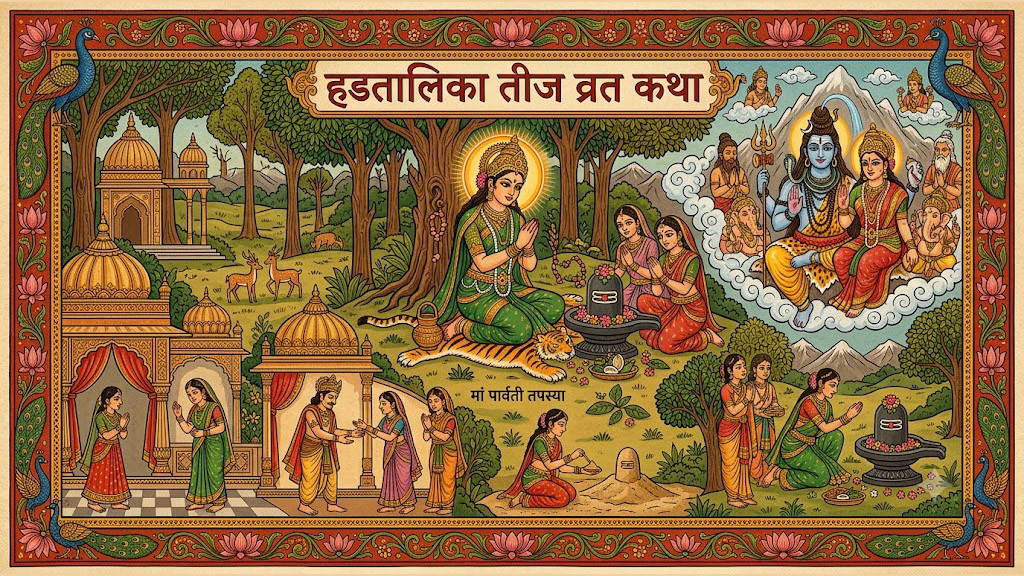
Hartalika Teej Vrat Katha: The Sacred Story of Parvati and Shiva
Hartalika Teej is a significant Hindu festival observed by many women with devotion to Goddess Parvati and Lord Shiva. It is traditionally associated with prayer, resolve, marital well-being and the spiritual strength of Goddess Parvati. The festival is observed on the Shukla Paksha Tritiya of the Hindu month of Bhadrapada, although local calendars and family customs should be consulted for the exact date.
For many devotees, the day includes a fast, preparation of a small puja space, worship of Shiva and Parvati, and listening to the Hartalika Teej Vrat Katha. Customs vary across regions and households. The heart of the observance is sincere devotion, not comparison or pressure.
What Is Hartalika Teej and Why Is It Celebrated?
The name is commonly explained through a traditional story in which Goddess Parvati’s friend helps her leave a situation in which she was being prepared for a marriage she did not wish to accept. The word is often linked in popular explanations with the ideas of a friend taking Parvati away. The festival honours Parvati’s determination and her deep devotion to Lord Shiva.
Devotees pray for harmony, strength, well-being and blessings in family life. Some observe the vrat for the welfare of their spouse, while others focus on spiritual discipline and the divine union of Shiva and Parvati. Participation and the meaning people attach to the day can differ.
Hartalika Teej Vrat Katha: The Traditional Story
According to a widely told devotional account, Goddess Parvati, the daughter of King Himavan, wished to marry Lord Shiva. Her father, however, considered another marriage arrangement for her. Parvati was deeply distressed because her heart was devoted to Shiva.
A close friend understood Parvati’s feelings and took her to a secluded forest so she could continue her worship without interruption. There, Parvati undertook intense penance and prayed to Lord Shiva with unwavering faith. In some versions of the katha, she worshipped a Shivalinga made from sand and spent the day and night in prayer.
Moved by her devotion and determination, Lord Shiva accepted Parvati as his consort. The story is remembered as an example of steadfast faith, inner strength and devotion. Details of the katha can vary by region, so families may hear slightly different versions during the puja.
Hartalika Teej reminds devotees that faith, patience and inner resolve can give strength through difficult moments.
Spiritual Significance of Hartalika Teej
- Devotion: The vrat honours Goddess Parvati’s dedication to Lord Shiva.
- Resolve and patience: The katha highlights determination and thoughtful commitment.
- Family well-being: Many devotees pray for peace, respect and harmony at home.
- Spiritual reflection: Prayer and restraint can offer time for reflection and gratitude.
- Tradition across generations: The vrat katha and puja customs help families pass on devotional stories.
Hartalika Teej Puja Vidhi: A Simple Traditional Guide
Rituals differ by community, so follow the method practised in your family or the guidance of a trusted local priest. A common home observance may include these steps:
- Prepare the puja area: Clean a suitable space and arrange images or representations of Lord Shiva and Goddess Parvati.
- Gather puja items: Families may use flowers, a diya, incense, fruits, sweets, water, kumkum, rice, leaves and other customary offerings.
- Make a devotional sankalp: Begin with a quiet prayer and your intention for the day, according to your tradition.
- Offer prayers: Worship Shiva and Parvati with flowers, aarti and offerings that are customary in your household.
- Listen to the vrat katha: Read or hear the Hartalika Teej story and reflect on its message of devotion and resolve.
- Conclude respectfully: Perform aarti or a closing prayer as customary and seek blessings for peace and well-being.
Some families make small clay or sand figures of Shiva and Parvati, while others worship established murtis or pictures. There is no need to assume every ritual is identical across India.
Fasting Rules and Common Customs
Hartalika Teej is associated with fasting in many communities. Some devotees observe a nirjala vrat, traditionally abstaining from both food and water, while others follow a modified fast based on family custom, health and personal circumstances. Ask your family or religious guide about the observance followed in your community.
Women may wear festive clothing, apply mehndi, prepare offerings and gather with relatives or friends for puja. In some regions, devotional songs and group prayers are an important part of the celebration. These customs are not universal, and a simple prayer at home can also be meaningful.
What Should Be Prepared for Hartalika Teej?
- Images or murtis of Lord Shiva and Goddess Parvati, according to your custom.
- A clean puja space, diya and safe lighting arrangements.
- Flowers, water, kumkum, rice, fruits or other traditional offerings.
- A copy of the Hartalika Teej Vrat Katha or a trusted source for reading it.
- Comfortable clothing and a practical plan for the day.
Fasting and Health: Please Observe With Care
Fasting without food or water can be risky for some people. Anyone who is pregnant or breastfeeding, has diabetes or another medical condition, takes medication that requires food or fluids, or has previously experienced problems with fasting should seek personalised medical advice before attempting a restrictive vrat. Children should not be encouraged to undertake restrictive fasts.
If you feel faint, confused, unusually weak or unwell, prioritise your health and seek medical help when needed. Religious observance should not require ignoring warning signs. If a full fast is not suitable, consider discussing a modified practice or prayer-based observance with your family and religious guide.
Frequently Asked Questions About Hartalika Teej
When is Hartalika Teej celebrated?
It is traditionally observed on Shukla Paksha Tritiya in the Hindu month of Bhadrapada. The Gregorian date changes each year, so check a reliable local Panchang for the correct date and puja muhurat.
What is the Hartalika Teej Vrat Katha about?
The popular story describes Goddess Parvati’s deep devotion to Lord Shiva, her penance and Shiva’s acceptance of her as his consort. Regional versions may differ in their details.
Why is Goddess Parvati worshipped on Hartalika Teej?
Parvati is honoured as a symbol of devotion, resolve and strength. Devotees seek blessings for well-being, harmony and spiritual growth.
Is a nirjala fast compulsory?
Practices vary. Some devotees follow a traditional nirjala vrat, while others choose a different observance. Health needs and personal circumstances should be taken seriously; consult a healthcare professional if fasting may affect your health.
Which puja items are used for Hartalika Teej?
Common items may include a diya, flowers, water, kumkum, rice, fruits and images or murtis of Shiva and Parvati. The exact list depends on regional and family traditions.
Final Thoughts: Keep the Meaning at the Heart of the Vrat
Hartalika Teej brings together the story of Goddess Parvati, prayer to Lord Shiva and customs that families have carried across generations. Whether your observance is elaborate or simple, approach it with sincerity, care and respect for different traditions and personal circumstances.
Note: This article describes commonly shared devotional traditions. Dates, puja methods and vrat practices can vary by region and Panchang; consult a trusted local source for specific guidance.