
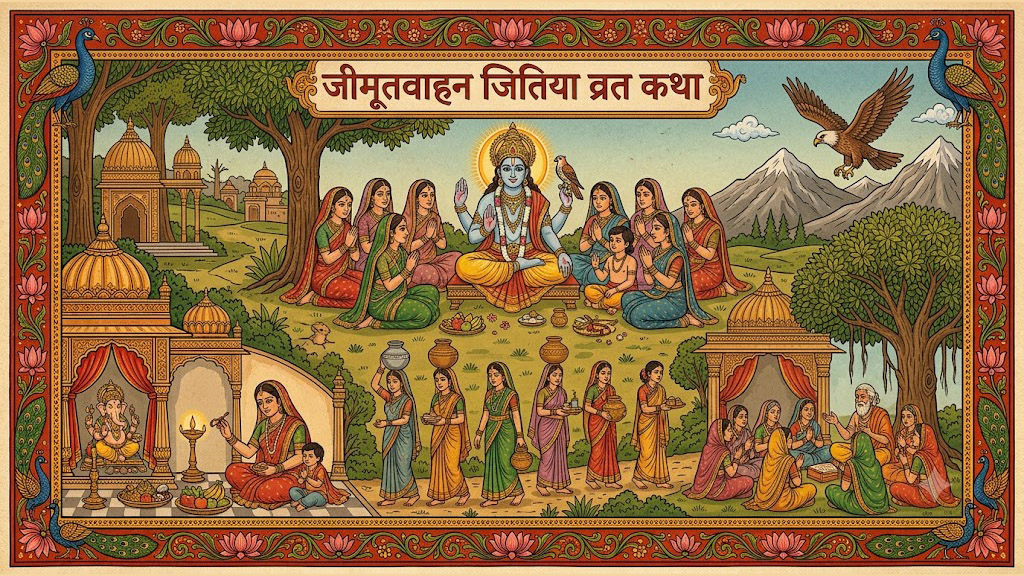
Jitiya Vrat Katha: The Story of Jimutavahana and a Mother’s Prayer
Jitiya Vrat, also known as Jivitputrika Vrat or Jiutiya, is a deeply meaningful Hindu observance kept by many mothers for the long life, health, safety and well-being of their children. It is especially associated with Bihar, Jharkhand, eastern Uttar Pradesh and the Mithila region. The main fast is observed around Ashwin Krishna Ashtami, but the exact date and observance can vary according to the local Panchang.
Jitiya is not only a day of fasting; it is also a time for family memories, prayers, folk traditions and the retelling of stories about compassion and protection. This guide explains the traditional Jitiya Vrat Katha, its meaning, common rituals and practical points to keep in mind. Customs differ from one community to another, so follow a trusted local tradition rather than assuming every family observes the vrat in exactly the same way.
What Is Jitiya Vrat and Why Is It Observed?
The name Jivitputrika is commonly understood in relation to the wish for children to live long and healthy lives. Many devotees worship the noble King Jimutavahana, whose legendary act of self-sacrifice is remembered as the heart of the vrat. Mothers pray for their children’s protection and well-being, while the day also honours the care, courage and responsibility that shape family life.
The observance is especially prominent in Bhojpuri, Maithili and other communities of eastern India and the Nepal Terai. Some households also remember the folk tale of the kite (Chilhi/Chilho) and the jackal (Siyarin/Siyaro). The stories and ritual details may differ by region.
Jitiya Vrat Katha: The Traditional Story of Jimutavahana
According to a widely shared traditional story, Jimutavahana was a compassionate and righteous prince. One day, while travelling near a forest or rocky shore, he encountered an elderly mother grieving for her son. She explained that the young Naga, Shankhachuda, was due to be offered to Garuda, the mighty celestial bird, under an agreement that demanded a serpent as food.
Moved by the mother’s anguish, Jimutavahana decided to take the young man’s place. He presented himself to Garuda so that the son could live and return to his mother. When Garuda realised that the person before him had willingly risked his life to save someone else’s child, he was deeply moved. In the traditional account, Garuda ended the cruel practice and the lives of the Nagas were restored.
Devotees remember Jimutavahana’s act as a powerful example of compassion, courage and selflessness. During Jitiya, mothers pray that their children may be protected and blessed with long, healthy lives. This is a devotional folk narrative, and versions of the katha may vary between communities.
The heart of Jitiya is a mother’s prayer, remembered through a story of compassion that places another family’s sorrow above one’s own safety.
The Folk Tale of Chilhi and Siyarin
Another popular Jitiya story tells of a kite and a female jackal who witnessed women observing the vrat and decided to do the same. In one common version, the kite kept the vow faithfully, while the jackal broke it when hunger became difficult to bear. In a later birth, they were born as sisters: one was blessed with children who survived, while the other suffered repeated grief. Through the grace associated with Jimutavahana and the revelation of their past actions, the story reaches a resolution.
Families tell this tale in different forms. Its familiar message is about sincerity, self-discipline and the importance of keeping a vow according to one’s ability and tradition. It should not be read as a reason to blame parents for illness or loss; children’s health is never a measure of a parent’s devotion.
Spiritual Significance of Jivitputrika Vrat
- Prayer for children: Mothers ask for their children’s safety, health, happiness and long life.
- Compassion and sacrifice: Jimutavahana’s story honours the willingness to protect someone vulnerable.
- Faith and resolve: The vrat gives devotees time for prayer, reflection and commitment.
- Family and community: Shared stories, songs and rituals connect generations and preserve local culture.
- Gratitude and remembrance: In some communities, the observance also sits within the period of Pitru Paksha and includes customs connected with ancestors.
Jitiya Vrat Puja Vidhi: Common Traditional Steps
Rituals differ by region and family. A common three-day pattern includes Nahay-Khay, the main Jitiya fast, and Paran. Use this as a general overview and confirm local timings with a reliable Panchang or a trusted family elder.
- Nahay-Khay: On the preparatory day, devotees bathe, clean the home or puja area, and eat a customary meal. In some households, specific local foods and practices are followed.
- Prepare the puja space: Arrange a clean place for worship and keep flowers, a diya, water and other offerings used in your tradition.
- Remember Jimutavahana: Offer prayers with a sincere intention for children’s well-being. Some families use a Jitiya thread or amulet as part of their custom.
- Listen to the vrat katha: Read or hear the story of Jimutavahana and, where customary, the tale of Chilhi and Siyarin.
- Observe the fast according to tradition: Many devotees keep a nirjala fast, without food or water, while practices and timings can vary. Do not attempt a restrictive fast if it is unsafe for you.
- Paran: After the fast ends according to the local tradition and tithi, bathe if customary, offer a closing prayer and break the fast gently.
Nahay-Khay, Jitiya and Paran: Understanding the Three Days
Nahay-Khay is the preparation day, when devotees bathe and eat according to household customs. The main Jitiya day is associated with the vrat, prayer and katha. Paran is the ritual breaking of the fast after the relevant tithi and local practice. Exact start and end times can differ according to the Panchang and regional tradition, so avoid relying on a date or time copied from an unrelated location.
Foods such as marua (finger-millet) roti, noni saag and other regional dishes may be part of the observance in some families. These are local customs rather than universal requirements. Ask relatives or community elders about the tradition practised in your household.
Jitiya Puja Items and Preparation Checklist
- A clean puja space and a picture or symbolic representation used in your family’s tradition.
- Flowers, a diya, incense and a safe way to light it.
- Water, rice, fruits or other customary offerings.
- A copy of the Jitiya Vrat Katha or a trusted source for reading it.
- A Jitiya thread or amulet, if it is part of your household custom.
- A plan for Nahay-Khay and Paran based on your local Panchang and family practice.
Fasting and Health: Please Take Care
Jitiya is traditionally observed by many devotees as a demanding fast, and some keep it without food or water. A waterless fast can be risky, particularly in hot weather or for people with medical conditions. Anyone who is pregnant or breastfeeding, has diabetes, kidney or heart problems, takes medicines that require food or fluids, or has previously struggled with fasting should speak with a healthcare professional before attempting a restrictive vrat.
If you feel faint, confused, unusually weak or seriously unwell, prioritise your health and seek medical help when needed. Consider a modified, prayer-centred observance if a strict fast is unsuitable. Children should not be asked to fast restrictively. Devotion does not need to come at the cost of health, and illness or hardship should never be treated as a sign of insufficient faith.
Frequently Asked Questions About Jitiya Vrat
When is Jitiya Vrat observed?
It is traditionally associated with Ashwin Krishna Ashtami, usually in September or October. The Gregorian date can change each year, and regional Panchang calculations may differ, so check a trusted local calendar.
What is the Jitiya Vrat Katha about?
A widely told katha describes Jimutavahana offering himself in place of a young Naga to save the child from Garuda. Another popular folk tale features Chilhi and Siyarin. Details vary by region.
Why do mothers observe Jivitputrika Vrat?
Many mothers observe it as a prayer for their children’s long life, health, safety and well-being. It also preserves family and regional devotional traditions.
Is a nirjala fast compulsory?
Strict waterless fasting is practised in many communities, but customs and individual circumstances vary. People with health concerns should seek medical advice and consider a safer alternative rather than risking harm.
Are Jitiya and Jivitputrika the same festival?
Yes. Jitiya, Jiutiya and Jivitputrika are commonly used names for this observance, although regional names, stories and rituals may differ.
What happens on Paran?
Paran is the breaking of the fast after the observance ends according to local custom and the relevant tithi. Check a trusted local Panchang for timing and resume food and fluids gently.
Final Thoughts: A Tradition of Love, Prayer and Protection
Jitiya Vrat brings together a mother’s hopes for her children, the story of Jimutavahana’s compassion and regional customs passed down through generations. Whether your family observes every traditional ritual or keeps the day simple with prayer and the vrat katha, approach the observance with sincerity, kindness and care for everyone’s well-being.
Note: This article describes commonly shared devotional traditions, not a single universal ritual script. Dates, stories, puja steps and fasting practices can vary by region and Panchang. Confirm local observance details with a trusted source.