
Navratri Fasting: Meaning, Food Traditions, Prayer and Self-Discipline
Karwa Chauth is a cherished Hindu festival observed by many married women, particularly in parts of North and Central India. Traditionally, women keep a fast and pray for the well-being, long life and happiness of their husbands. In many families, the day is also an occasion for affection, shared customs, dressing in festive clothes and gathering with relatives and friends. Practices differ by region, community and household, and some couples now choose to observe the day together.
From preparing sargi before sunrise to gathering for evening puja and looking at the moon, Karwa Chauth is shaped by rituals that connect generations. The most meaningful observance is one carried out with sincerity, mutual respect and care for everyone’s well-being.
What Is the Meaning and Significance of Karwa Chauth?
The name is commonly associated with the karwa, a small earthen pot used in traditional rituals, and chauth, referring to the fourth lunar day. The festival falls on Chaturthi during the Krishna Paksha of the Hindu month of Kartik in many North Indian calendars, though local calendars and customs can vary.
For devotees, Karwa Chauth expresses prayer, commitment and hope for family well-being. It is also an opportunity to celebrate relationships through thoughtful gestures, family stories and shared meals after the fast.
1. Sargi: The Pre-Dawn Meal
In many Punjabi and North Indian families, the day begins with sargi, a pre-dawn meal often prepared or gifted by a mother-in-law. It may include fruit, nuts, sweets, water and other foods chosen according to family custom. The meal is traditionally eaten before sunrise, after which the fast begins.
Sargi is not identical in every household. If you observe the fast, plan nourishing foods and fluids that suit your needs and follow the customs meaningful to your family.
2. Getting Ready for the Festival
Many people wear festive clothing, apply mehndi, decorate a puja area and prepare a thali with a diya, flowers, kumkum, rice, sweets and a karwa or kalash. Red and other bright colours are popular in some communities, but clothing and decoration are personal choices rather than universal rules.
Families may exchange gifts or gather during the day. If you are hosting, keep preparations manageable so that the occasion feels joyful rather than stressful.
3. Karwa Chauth Puja Vidhi
In the evening, devotees commonly gather for a puja dedicated to Goddess Parvati, Lord Shiva, Lord Ganesha and other deities according to their tradition. A simple observance may include cleaning the prayer space, lighting a diya, offering flowers and prayers, listening to or reading the Karwa Chauth Vrat Katha, and seeking blessings for family happiness.
- Prepare a clean puja space and arrange the items used in your family tradition.
- Light a diya safely and offer flowers, kumkum, rice or sweets as customary.
- Listen to the vrat katha or recite a prayer with attention and devotion.
- Share the occasion respectfully with family members and other devotees.
Ritual details differ across regions, so follow a trusted family practice or local priest’s guidance if you need specific instructions.
4. Karwa Chauth Vrat Katha
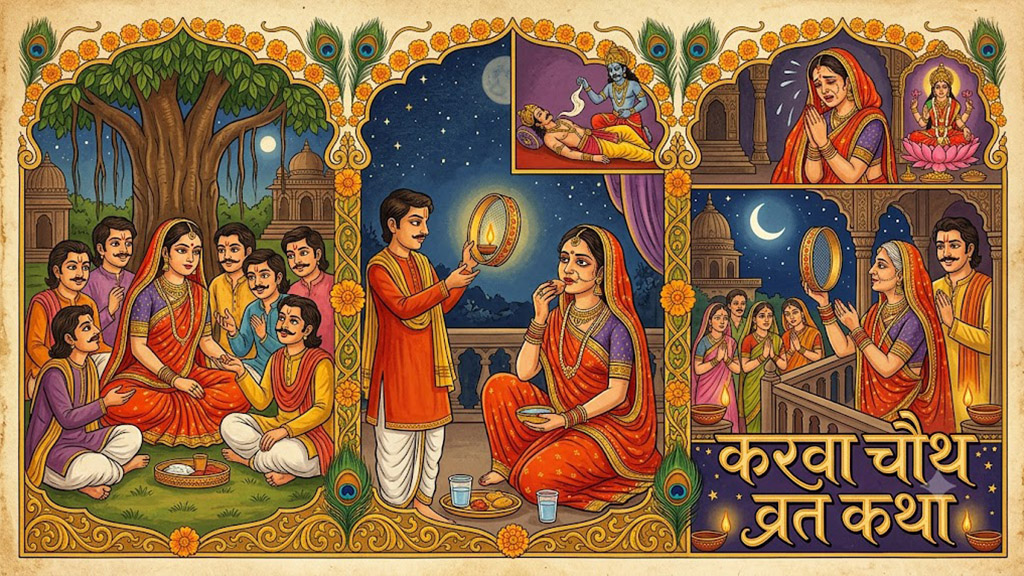
The vrat katha is an important part of many Karwa Chauth gatherings. Different versions are told in different communities, with stories that emphasise devotion, patience, faith and the importance of following the ritual with care. Listening together can preserve family traditions and help younger generations understand why the festival is observed.
Because several regional versions exist, there is no need to assume that every family tells the story in exactly the same way.
5. Moonrise Prayer and Breaking the Fast
For many observers, moonrise is the central moment of the day. After the moon becomes visible, devotees may offer water, view the moon through a sieve, pray and then look at their spouse, followed by breaking the fast. The exact sequence and items used vary by family and local custom.
Moonrise time changes by date and location. Check a reliable local Panchang or astronomy source for the correct time rather than relying on a generic time for all cities. Cloud cover can also affect visibility, so follow local religious guidance if the moon cannot be seen.
6. Family Customs and Modern Ways to Observe
Some families organise group puja, exchange karwas or gifts, share festive food after moonrise, or call relatives who live far away. Others keep the observance simple at home. Couples may use the day to express gratitude, spend time together or share responsibilities in a way that feels meaningful to them.
Karwa Chauth traditions should be approached with mutual respect. Participation is a personal choice, and the spirit of the day can be honoured without pressure or comparison.
Fasting, Health and Practical Care
Traditional Karwa Chauth fasts may involve abstaining from food and water for much of the day. Such fasting is not suitable for everyone. People who are pregnant or breastfeeding, have diabetes or another medical condition, take medicines that require food or fluids, or have a history of eating disorders should seek individual medical advice before fasting. Children should not be encouraged to undertake restrictive fasts.
If you feel faint, confused, unusually weak or unwell, prioritise your health and seek medical help when needed. Devotion does not require ignoring warning signs. You can also ask your family or religious guide about a modified observance that respects both tradition and well-being.
“The heart of a festival is not only in its rituals, but in the care, gratitude and understanding we share with one another.”
A Simple Karwa Chauth Preparation Checklist
- Confirm the date and local moonrise time using a reliable Panchang.
- Prepare sargi and puja items according to your family’s customs.
- Set aside time for the vrat katha, prayer and a calm evening gathering.
- Plan safe, comfortable arrangements and avoid unnecessary exertion.
- Respect each person’s choice about fasting and participation.
Frequently Asked Questions About Karwa Chauth
When is Karwa Chauth observed?
It is generally observed on Krishna Paksha Chaturthi in the Hindu month of Kartik in many North Indian traditions. The Gregorian date changes each year, so consult a local Panchang for the relevant year and location.
What is sargi?
Sargi is a traditional pre-dawn meal eaten before the fast begins in many families. Its foods and customs vary, and it is often prepared or gifted by a mother-in-law.
Why do people look at the moon through a sieve?
In some traditions, devotees view the moon through a sieve as part of the evening ritual before completing the fast. The details of the ritual differ among communities.
Is fasting required to celebrate Karwa Chauth?
Fasting is central to many traditional observances, but participation varies. People can discuss a suitable practice with their family and religious guide, especially when health or personal circumstances make fasting unsuitable.
Final Thoughts: Honour the Tradition With Care
Karwa Chauth brings together prayer, family customs and moments of shared celebration. Whether your observance includes a full traditional fast, a simple puja or time spent connecting with loved ones, approach the day with sincerity and respect for different choices.
Note: This article describes general cultural and devotional practices. Rituals vary by region and family, and the health guidance here is not a substitute for individual medical advice.