
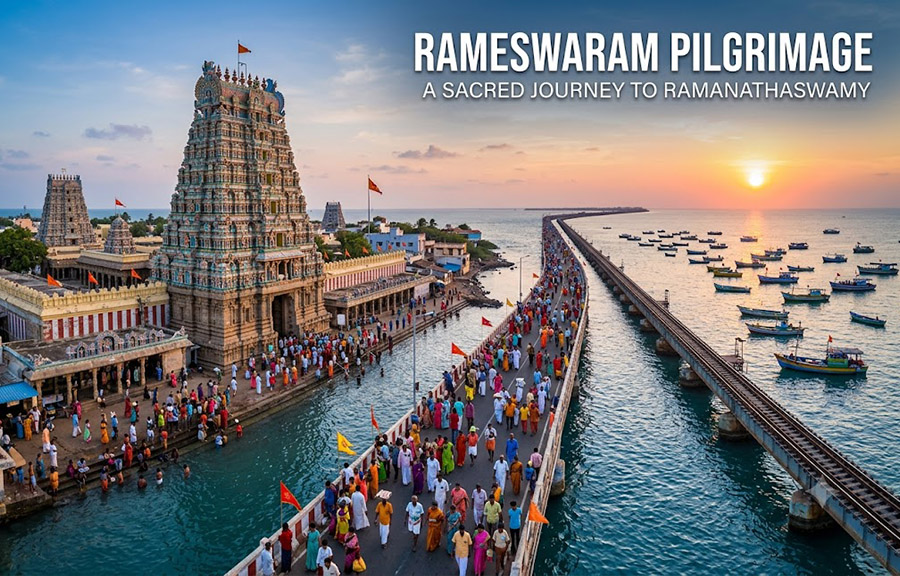
Rameswaram Pilgrimage Guide 2026: Ramanathaswamy Temple, 22 Theerthams, Dhanushkodi & Travel Tips
Perched on Pamban Island in Tamil Nadu, Rameswaram holds a supreme position in Indian spiritual heritage. It is both one of the twelve sacred Jyotirlingas dedicated to Lord Shiva and an essential southern pillar of the revered Char Dham circuit. Deeply linked with the epic Ramayana, Rameswaram is where Lord Rama built the Ram Setu to reach Lanka and installed a Shiva Linga to express gratitude and perform penance after victory.
Every year, millions of pilgrims travel to Rameswaram to seek spiritual purification through ritual baths in the sea and the temple's 22 sacred wells. Beyond its deep spiritual roots, Rameswaram mesmerizes visitors with magnificent Dravidian architecture, long outer corridors, calm azure waters, and the haunting beauty of Dhanushkodi.
Key Highlights of Rameswaram Pilgrimage
1. Ramanathaswamy Temple & The Grand Corridors
The centerpiece of Rameswaram is the ancient Sri Ramanathaswamy Temple, famous for having the longest temple corridor in the world—spanning over 1,200 meters lined with thousands of intricate, hand-carved stone pillars. The temple houses two Lingas: the Ramalingam (crafted from sand by Goddess Sita) and the Vishwalingam (brought by Lord Hanuman from Mount Kailash). Following traditional custom, the Vishwalingam is worshiped first.
2. The Holy Bath in 22 Theerthams
A central ritual of the Rameswaram pilgrimage is bathing in the 22 Theerthams (sacred water wells) located inside the temple premises. The sequence traditional begins with a dip in Agni Theertham (the calm sea bay adjacent to the eastern entrance), followed by walking through the inner courtyards where temple priests pour water from all 22 wells onto devotees. Each well is believed to possess distinct mineral properties and spiritual blessings.
3. Agni Theertham
Located right in front of the eastern seashore of Ramanathaswamy Temple, Agni Theertham is where pilgrims perform ancestral rites (Pitru Tarpanam) and take their preliminary purification bath before entering the temple for darshan.
4. Dhanushkodi & Ram Setu Point
Situated at the southern tip of Pamban Island, Dhanushkodi is a ghostly, breathtaking beach town destroyed during the 1964 cyclone. It marks the starting point of Ram Setu (Adam's Bridge)—a chain of natural limestone shoals connecting India to Sri Lanka. The journey along the narrow asphalt road flanked by the Indian Ocean on one side and the Bay of Bengal on the other is unforgettable.
5. Panchamukhi Hanuman Temple & Floating Stones
This sacred shrine houses a deity of Lord Hanuman showing five faces. The temple preserves the famous floating stones used by the Vanara Sena to build the bridge across the sea to Lanka, allowing visitors to see the unique porous stones up close.
6. Gandhamadhana Parvatham (Ramjharoka Temple)
The highest point on Pamban Island, this elevated shrine houses the imprinted footprints (Charan Paduka) of Lord Rama. It provides panoramic views of Rameswaram town, lush greenery, and the surrounding ocean.
Suggested 2-Day Itinerary for Rameswaram
Here is a well-planned 2-day itinerary to make the most of your pilgrimage without feeling rushed:
- Day 1 (Sanctum, 22 Theerthams & Local Shrines): Begin early morning around 5:00 AM with a bath at Agni Theertham. Proceed inside the temple to complete the 22 Theertham baths, change into fresh clothes, and join the queue for main Lingam darshan. In the afternoon, visit Gandhamadhana Parvatham and the Panchamukhi Hanuman Temple. Spend the evening walking along the peaceful temple outer streets.
- Day 2 (Dhanushkodi, Pamban Bridge & Memorials): Drive early to Dhanushkodi to watch the sunrise where the two seas meet. Explore the ruins of the old town and naval tip. On your return journey, visit the Dr. A.P.J. Abdul Kalam National Memorial and stop at Pamban Bridge (India's iconic sea bridge) before departing.
“Taking a dip in the 22 Theerthams of Rameswaram is not merely a ritual bath; it is a conscious release of past burdens in pursuit of inner clarity.”
Best Time to Visit Rameswaram
The ideal season for a Rameswaram pilgrimage is from October to March, when the tropical weather becomes cooler and ocean conditions remain gentle. Summers (April to June) can be quite hot and humid, while the monsoon season (July to September) brings heavy coastal rainfall that may disrupt outdoor beach visits at Dhanushkodi.
What to Pack for Your Pilgrimage
- Multiple changes of lightweight cotton clothes (since taking baths at Agni Theertham and the 22 wells will soak your clothing).
- Modest traditional temple attire (dhotis, pyjama-kurtas, sarees, or salwar suits). Strict traditional dress code is enforced inside the main temple.
- Waterproof pouches or plastic bags to store wet clothes after completing the 22 Theertham baths.
- Comfortable footwear that easily slips off outside temple gates.
- Sun protection essentials like hats, sunglasses, and sunscreen for daytime trips to Dhanushkodi.
Essential Temple Etiquette & Practical Travel Tips
- Sequence of Ritual Bath: Always bathe in the sea at Agni Theertham first before proceeding inside the temple for the 22 well baths. Towels and change rooms are available near the temple precincts.
- Electronic Device Restrictions: Mobile phones, digital cameras, and electronic gadgets are strictly banned inside the main temple. Store them safely in hotel rooms or official locker counters outside.
- Dress Code Compliance: Men are required to wear dhotis or trousers with shirts/kurta, while women should wear sarees or salwar suits. Shorts, skirts, and western beachwear are strictly prohibited inside temple gates.
- Early Morning Spatika Linga Darshan: Try to attend the early morning Spatika Linga Puja (typically between 5:00 AM and 6:00 AM) inside the inner sanctum for a deeply peaceful spiritual experience.
Frequently Asked Questions
How long does it take to complete the 22 Theertham bath ritual?
Depending on crowd density, completing the bath across all 22 wells inside the temple usually takes between 1 to 2 hours.
How to reach Rameswaram?
Rameswaram is connected by rail via the Pamban rail line and by road via NH 87. The nearest airport is Madurai Airport, situated approximately 170 km away (a 3.5 to 4-hour drive).
Is it safe to visit Dhanushkodi?
Yes, visiting Dhanushkodi is safe during designated day hours via the asphalt road. However, visitors must return by sunset as entry is restricted during night hours due to ocean proximity.
Final Thoughts
A pilgrimage to Rameswaram bridges ancient Ramayana legends with profound spiritual healing. As you walk through its echoing carved corridors and feel the sea breeze along Pamban Island, you carry home a sense of peace and timeless devotion. Om Namah Shivaya!