
Vaishno Devi Yatra Guide 2026: Registration, Darshan, Route Options & Travel Tips
The Vaishno Devi Yatra is one of the most revered and spiritually uplifting pilgrimages in India. Nestled within the fold of the majestic Trikuta Hills in Jammu and Kashmir, millions of devotees trek up to the Holy Cave Shrine of Mata Vaishno Devi every year to seek blessings from the divine manifestations of Goddess Maha Kali, Maha Lakshmi, and Maha Saraswati.
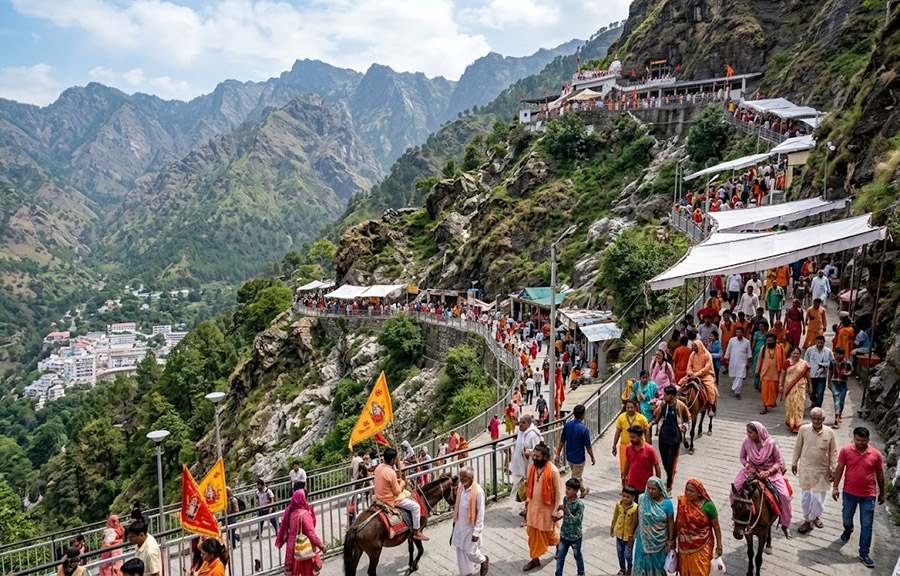
Starting from the base town of Katra, the 12-kilometer trek up to the Bhawan is an experience filled with faith, devotion, and breathtaking mountain vistas. Proper planning—covering Yatra registration, route choices, weather preparation, and helicopter or battery car bookings—ensures your pilgrimage remains safe and smooth.
Key Highlights of Vaishno Devi Pilgrimage
1. Katra Base Camp & Yatra Registration
Katra serves as the energetic base camp where all yatris must register before beginning the trek. Registration can be completed online via the official Shri Mata Vaishno Devi Shrine Board (SMVDSB) website or offline at designated counters in Katra (such as near the Bus Stand or Railway Station). Every pilgrim receives an RFID Yatra Access Card which must be kept handy through checkpoints.
2. The Trekking Route (Katrat to Bhawan)
The traditional 12 km trek from Katra to the Bhawan is well-paved, illuminated, and lined with refreshment stalls, shelters, and medical aid centers. A newer alternative track (Tarakote Marg) offers a gentler slope, greenery, and dedicated food courts, making it popular among families and elderly walkers.
3. The Holy Cave Darshan at Bhawan
At the Bhawan, devotees get darshan of the Holy Pindies (natural rock formations) representing the three forms of the Goddess. Depending on crowd density and seasonal regulations, pilgrims pass through the old sacred cave or newly constructed modern steel tunnels designed for crowd management.
4. Bhairon Nath Temple
According to legend, the Vaishno Devi pilgrimage is incomplete without visiting the Bhairon Nath Temple, located about 2.5 km further up from the Bhawan. A cable car (Ropeway) service connects the Bhawan directly to Bhairon Temple, saving time and steep climbing for elderly visitors.
Suggested 2-Day Itinerary for Vaishno Devi
A balanced 2-day plan gives you enough time for rest, darshan, and the return journey without exhaustion:
- Day 1 (Arrival in Katra & Trek to Bhawan): Arrive in Katra, complete your RFID Yatra registration, and begin your trek by late afternoon or early evening to avoid harsh daytime heat. Reach the Bhawan by night, freshen up at shrine board accommodations or lockers, and join the queue for holy darshan.
- Day 2 (Bhairon Temple & Return to Katra): Take the early morning ropeway to visit the Bhairon Nath Temple. After seeking blessings, begin your descent back to Katra (or take a helicopter/pony if preferred), rest, and plan your onward journey.
“Every step taken along the Trikuta mountain trail with the chant of 'Jai Mata Di' lightens the heart and fills the soul with unbreakable peace.”
Best Time to Visit Vaishno Devi
The shrine is open year-round, but the best months to visit are from March to October when the weather is pleasant. Winter months (December to January) experience cold mountain temperatures and occasional snowfall around the Bhawan, which adds scenic beauty but requires heavy woolens and cautious walking.
What to Pack for Your Yatra
- Comfortable walking or trekking shoes with good grip (crucial for the 12 km slope).
- Light woolens or jackets if traveling during winter or visiting during chilly mountain nights.
- A lightweight backpack to carry water bottles, dry snacks, and essential medicines.
- Valid government photo ID for registration verification and hotel check-ins.
- Cash for small purchases, locker deposits, and pony/palki services, as digital connectivity can fluctuate along mountain ridges.
Essential Yatra Tips & Guidelines
- Mandatory RFID Card: Do not lose your RFID access card issued at Katra; it is checked at multiple security points along the track.
- Online Bookings: Book helicopter tickets, room accommodations, and special puja slots exclusively through the official SMVDSB website to avoid fraudulent agents.
- Pony and Palki Services: If you or your family members cannot walk the full distance, authorized pony, pithoo (porters), and palki (palanquins) services are available at fixed government-regulated rates from Katra.
- Bag Security: Large luggage can be safely deposited at cloakrooms provided free of charge by the Shrine Board at Katra and Bhawan before entering security checkpoints.
Frequently Asked Questions
How to reach Katra base camp?
Katra is well-connected by trains via Shri Mata Vaishno Devi Katra railway station. The nearest airport is Jammu Tawi Airport (IXJ), located about 50 km away (a 1.5 to 2-hour taxi ride).
Is online registration mandatory for Vaishno Devi Yatra?
Yes, obtaining an RFID Yatra Access Card is mandatory. While online registration is recommended, offline counters in Katra also issue cards free of charge.
Are mobile phones allowed inside the Bhawan?
Mobile phones and electronic gadgets are generally not permitted inside the inner sanctum / queue area of the Holy Cave. Safe locker facilities are available near the Bhawan to store devices.
Final Thoughts
A pilgrimage to Mata Vaishno Devi is an unforgettable journey of faith, endurance, and divine grace. Prepare well, respect the mountain environment, and let the chant of 'Jai Mata Di' guide your steps safely to the holy shrine.