
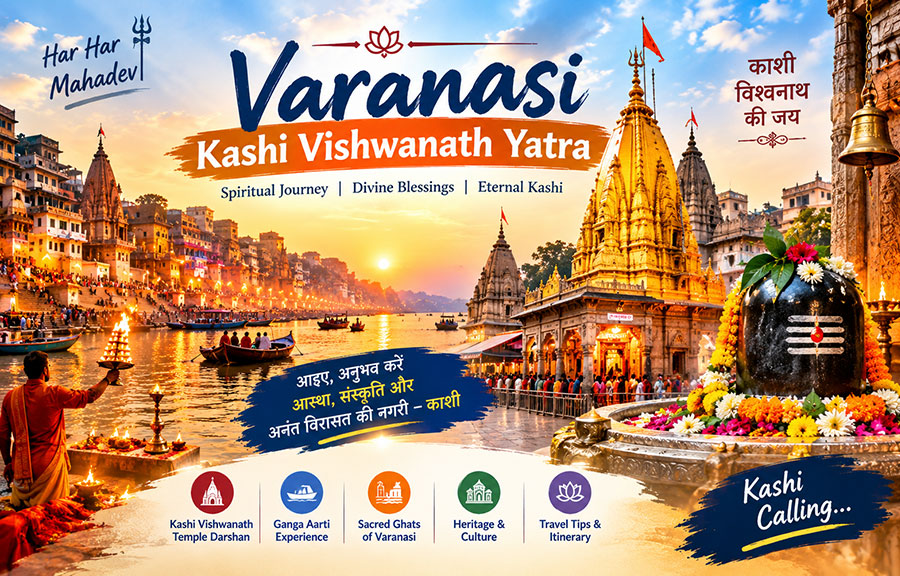
Kashi Vishwanath Yatra Guide 2026: Darshan, Ganga Aarti and Varanasi Travel Tips
There are cities people visit for a holiday, and there are places that seem to invite you to pause and look inward. Varanasi, also known as Kashi or Banaras, is one of those places. Set beside the River Ganga, the city is known for its ancient lanes, riverside ghats, devotional music and the daily rituals that continue from dawn into the night. For many pilgrims, a visit to Shri Kashi Vishwanath Temple is the heart of the journey.
This guide brings together practical planning advice and cultural context for a Kashi Vishwanath Yatra. It covers the temple, Ganga Aarti, nearby places to explore, transport, packing and respectful visitor behaviour. Temple arrangements, entry procedures and timings can change, particularly on festivals and special occasions, so check the official temple website before travelling.
Why Is Kashi Vishwanath Temple So Important?
Shri Kashi Vishwanath Temple is dedicated to Lord Shiva, worshipped here as Vishwanath or Vishweshwara, meaning the Lord of the Universe. It is revered as one of the twelve Jyotirlingas. The present temple structure is associated with Maharani Ahilyabai Holkar, who had it built in 1780. For devotees, darshan is a deeply personal act of faith; for visitors interested in history and culture, the temple is also part of Kashi’s living heritage.
The Kashi Vishwanath Corridor connects the temple area with the Ganga ghats and has made the approach more organised for many visitors. Even so, the surrounding lanes can be crowded, and queues may grow during weekends, holidays and major religious festivals. Give yourself time and avoid planning the visit around a tight onward connection.
Plan Your Kashi Vishwanath Darshan
Before leaving for the temple, check the latest darshan schedule, entry instructions and any ticket requirements for special aartis. General darshan and ticketed rituals may follow different arrangements. Use the official Shri Kashi Vishwanath Temple website for current notices, booking services and helpdesk information.
- Check the official website shortly before your visit for timings, notices and ticket availability.
- Carry the identification or booking confirmation requested for the service you have booked.
- Review rules about mobile phones, cameras, bags and other belongings before joining the queue.
- Arrive with enough time for security checks and walking through busy lanes.
- Follow instructions from temple staff and avoid unofficial offers that promise special access.
Do not rely on old social media posts for current entry rules. On festival days, full-moon days or other special occasions, schedules and crowd-management arrangements may be different.
Experience the Ganga Aarti
The evening Ganga Aarti is one of Varanasi’s most memorable public rituals. Priests perform a coordinated offering of lamps, incense and prayer beside the river, while the sound of bells and devotional chants carries across the ghat. Dashashwamedh Ghat is especially well known for the ceremony, while other ghats offer their own atmosphere and views of river life.
If you want to watch from the ghat, arrive early enough to find a safe place without pushing through the crowd. Boat viewing may be available, but use a reputable operator, agree on the fare and duration beforehand, wear any provided life jacket and follow river-safety instructions. Keep children close and avoid stepping onto wet or crowded edges.
“In Kashi, the journey is not only through ancient streets; it is also a chance to make room for stillness.”
Places to Visit During Your Varanasi Yatra
1. Dashashwamedh Ghat
This lively riverside ghat is strongly associated with the evening Ganga Aarti. It is a place to observe ritual, music and the changing rhythm of the river. Crowds can be dense around ceremony time, so keep valuables secure and follow local directions.
2. Assi Ghat
Assi Ghat is popular for early-morning walks and the experience of watching the city wake up beside the Ganga. The mood can feel different from the busy evening gathering at Dashashwamedh. Sunrise programmes and events can vary, so check local information if you want to attend a particular activity.
3. Manikarnika Ghat
Manikarnika is a sacred cremation ghat and an important part of Hindu beliefs about life, death and liberation. Visitors should approach with sensitivity. Do not photograph funeral rites or grieving families, and never treat the site as an ordinary sightseeing stop.
4. Annapurna Temple and the old lanes
The area around Kashi Vishwanath contains other revered shrines, small shops and narrow lanes filled with everyday life. Walk patiently, keep to the side when possible and be mindful of worshippers moving towards the temples. Ask before photographing people or religious activity.
5. Sarnath
Located outside the central city, Sarnath is an important Buddhist pilgrimage site associated with the Buddha’s first sermon. It can add a different historical and spiritual perspective to a longer Varanasi visit. Check current museum hours and transport arrangements before setting out.
A Simple Two-Day Kashi Itinerary
This flexible outline is a starting point, not a fixed schedule. Adjust it to your arrival time, mobility, crowd conditions and temple announcements.
- Day 1 – Temple and old Kashi: Visit Kashi Vishwanath Temple after checking the current darshan process. Explore nearby shrines and lanes at a comfortable pace, leaving time for meals and rest.
- Day 1 evening: Watch the Ganga Aarti from a safe, permitted viewing area. Arrive early and follow crowd-management instructions.
- Day 2 morning: Visit Assi Ghat or enjoy a quiet riverside walk. Sunrise boat trips depend on conditions and availability, so confirm arrangements locally.
- Day 2 later: Explore Sarnath or other places that match your interests, then allow enough time to return to your hotel or station.
If your main purpose is darshan, keep the itinerary light. Kashi’s lanes, queues and traffic can make short distances take longer than expected.
How to Reach Varanasi
Varanasi is served by Lal Bahadur Shastri International Airport, railway stations including Varanasi Junction and Banaras, and road connections to nearby cities. The best option depends on your starting point and travel dates. From the airport or station, use a licensed taxi, an authorised transport service or a clearly identified local option.
Vehicles may not be able to reach the temple entrance because of traffic controls and pedestrian-only lanes. Ask your driver where the permitted drop-off point is and expect to walk for part of the route. During major festivals, allow extra time for diversions and crowd restrictions.
What to Wear and Carry
- Wear comfortable, modest clothing suitable for a religious place and the season.
- Choose walking shoes or sandals that are easy to manage if footwear must be left outside designated areas.
- Carry essential medicines, drinking water where permitted, and a small amount of cash.
- Keep identification, booking confirmations and emergency contacts secure.
- Carry a light scarf or sun protection during hot weather and a rain layer during the monsoon.
- Bring only what is necessary and check the temple’s current restrictions on electronic devices and bags.
Keep belongings close in crowded places. If you are travelling with older adults or children, agree on a meeting point in case the group gets separated and save your accommodation details on your phone and on paper.
Respectful Travel and Safety Tips
- Respect worship: Keep your voice low in prayer areas and follow instructions from temple staff.
- Ask before taking photographs: Never photograph cremation rites, grieving families or people who have not agreed to be photographed.
- Be careful near the river: Ghat steps can be slippery; avoid entering the water in unsafe conditions and follow local advice.
- Stay hydrated: Varanasi can be hot and humid. Take breaks and seek shade during the warmer part of the day.
- Use clear pricing: Agree on boat fares, guide services and transport costs before the service begins.
- Keep the city clean: Use bins where available and do not throw plastic or offerings into the river.
- Plan for crowds: Keep children close, avoid pushing and follow official barriers and queue systems.
Frequently Asked Questions About Kashi Vishwanath Yatra
Where is Kashi Vishwanath Temple?
The temple is in the old city of Varanasi, Uttar Pradesh, near the River Ganga and the historic ghats.
Is Kashi Vishwanath Temple one of the Jyotirlingas?
Yes. It is revered as one of the twelve Jyotirlingas dedicated to Lord Shiva.
Do I need to book darshan in advance?
Requirements depend on the type of darshan or ritual. Check the official temple website for current booking options, ticket conditions and general entry instructions.
What is the best time to visit Varanasi?
Comfort, weather, festivals and crowd levels all matter. Cooler months are often more comfortable for walking, while festival periods can be especially busy. Check the forecast and local advisories for your dates.
Where can I verify temple timings and aarti details?
Use the official Shri Kashi Vishwanath Temple website and the Varanasi district administration website. Timings and arrangements can change on special days.
Final Thoughts
A Kashi Vishwanath Yatra can be both a sacred act of devotion and a meaningful encounter with one of India’s most distinctive living cities. Prepare for the temple visit, leave time to experience the ghats without rushing, and treat local people and traditions with care. The most rewarding plan is one that makes space for prayer, patience and discovery.
Travel note: This article is a general visitor guide, not a live update of temple timings, crowd levels or transport conditions. Confirm current arrangements with official sources before departure.