
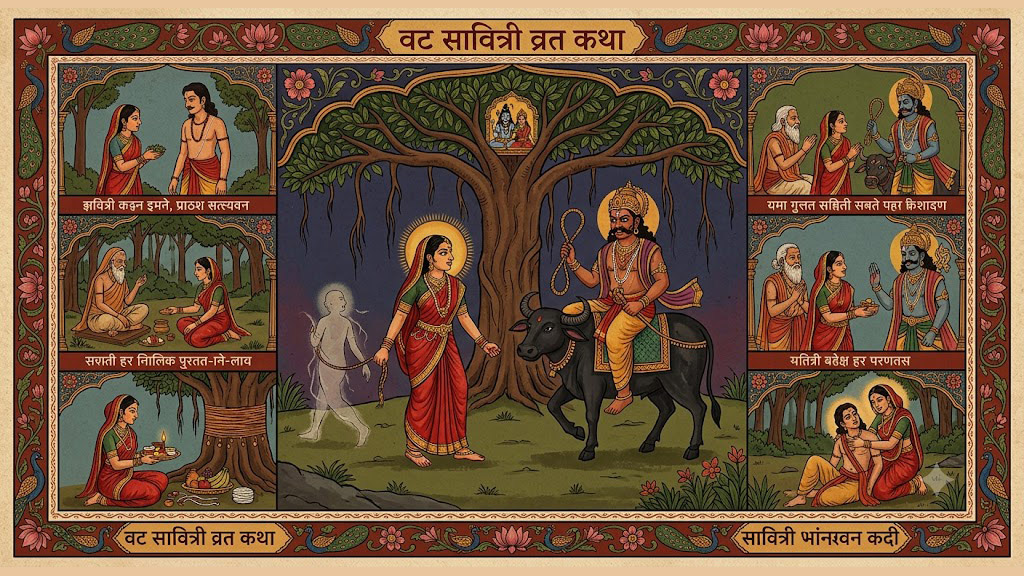
Vat Savitri Vrat Katha: The Story of Jimutavahana and a Mother’s Prayer
Vat Savitri Vrat is a revered Hindu observance associated with the devotion, courage and determination of Savitri, whose love for her husband Satyavan became the heart of a much-loved story. Many married women observe this vrat by praying for the well-being, longevity and happiness of their husbands and for harmony in family life. The banyan tree, known as the vat or वट वृक्ष, holds a central place in the rituals because it symbolises longevity, strength and continuity.
The festival is observed on different dates in different regional traditions. In many parts of North and Western India, Vat Savitri Vrat is associated with Jyeshtha Amavasya, while Vat Purnima is observed on Jyeshtha Purnima in several western regions. Ritual details, fasting practices and calendar dates can vary, so check a reliable local Panchang and follow your family tradition.
What Is Vat Savitri Vrat and Why Is It Observed?
Vat Savitri Vrat honours Savitri, remembered in Hindu tradition for her wisdom, unwavering resolve and devotion. The story is not simply about a wife praying for her husband; it also celebrates clear thinking, courage and the power of a person who refuses to give up in the face of hardship.
During the observance, devotees may offer prayers beneath a banyan tree, tie sacred thread around its trunk, listen to the vrat katha and seek blessings for their family. Some households observe a fast, while others follow a modified practice according to health, age and family custom.
Vat Savitri Vrat Katha: The Story of Savitri and Satyavan
According to the well-known story from Hindu tradition, Savitri was a wise and courageous princess. When the time came for her to marry, she chose Satyavan, a noble young man who lived in the forest with his parents. Satyavan was known for his goodness, but the sage Narada warned Savitri that Satyavan’s life was destined to be short.
Even after hearing this prediction, Savitri remained firm in her decision. She married Satyavan and devoted herself to life in the forest, caring for her family with patience and dignity. As the foretold day approached, Savitri undertook prayers and spiritual observances. On the fateful day, she accompanied Satyavan into the forest.
While working, Satyavan suddenly became weak and rested his head in Savitri’s lap. In the traditional account, Yama, the god of death, arrived to take Satyavan’s life force. Savitri followed Yama and spoke with him respectfully and wisely. Through her calm words, moral strength and devotion, she continued the conversation even as Yama urged her to return.
Moved by Savitri’s wisdom and steadfastness, Yama offered her boons, asking her to choose blessings other than Satyavan’s life. Savitri requested blessings for her family and her in-laws. Finally, through a thoughtful request that could not be fulfilled without Satyavan living, she persuaded Yama to restore her husband’s life. Satyavan returned to life, and Savitri’s faith and courage became an enduring symbol of determination and love.
The story of Savitri and Satyavan reminds devotees that love can be expressed through courage, wisdom, patience and the strength to face difficult moments with dignity.
Different retellings may vary in details, dialogue and the sequence of boons. The story is a traditional religious narrative shared through generations, and families may use the version familiar to their region.
Spiritual Significance of the Banyan Tree
The banyan tree is central to Vat Savitri observance. Its wide branches and long-lasting growth make it a traditional symbol of endurance, shelter and continuity. In the puja, devotees circle the tree and tie thread around its trunk as part of their prayers. This ritual expresses devotion and a wish for stability, health and harmony in family life.
- Faith and commitment: Savitri’s story honours dedication, patience and inner strength.
- Family well-being: Devotees pray for the health, safety and happiness of their loved ones.
- Wisdom and courage: Savitri is remembered for her thoughtful words and resolve, not only for fasting.
- Respect for nature: Worship of the banyan tree offers an opportunity to reflect on trees as sources of shade, shelter and life.
- Cultural continuity: The vrat katha and rituals help families pass stories and customs from one generation to the next.
Vat Savitri Vrat Puja Vidhi: Common Traditional Steps
There is no single ritual sequence followed by every community. The steps below are a general guide; follow local customs and the guidance of your family elders or priest.
- Prepare for the vrat: Clean the home and puja area. On the day of observance, bathe and wear clean or traditional clothes according to your custom.
- Arrange puja items: Keep flowers, water, fruits, roli or kumkum, rice, incense, a diya and sacred thread ready. The exact offerings differ by region.
- Offer prayers: Pray to Savitri and remember the story of Savitri and Satyavan with a sincere intention for family well-being.
- Worship the banyan tree: Offer water and flowers where customary, then circumambulate the tree and wrap sacred thread around its trunk according to local practice. Avoid damaging the tree or leaving plastic and other waste behind.
- Listen to or read the vrat katha: Recite the traditional story and reflect on its themes of courage, wisdom and devotion.
- Complete the observance: Conclude with prayer and follow your family’s practice for prasad and breaking the fast.
Vat Savitri Vrat Puja Items Checklist
- Flowers and seasonal fruits.
- Water in a clean vessel.
- Roli or kumkum and rice grains, if customary.
- A diya and incense, used safely.
- Red, yellow or other sacred thread used in your tradition.
- A copy of the Vat Savitri Vrat Katha.
- A small cloth or plate for arranging offerings.
These are common examples rather than compulsory items. Use what is customary in your household and avoid harming the tree or leaving offerings that could litter the surroundings.
Fasting, Food and Health Considerations
Some devotees keep a strict fast, while others choose a partial fast or observe the day through prayer. The form of fasting can differ between families. A fast should never put health at risk: people who are pregnant or breastfeeding, have diabetes, kidney or heart conditions, take medicines that require food or fluids, or have a history of fainting should speak with a healthcare professional before attempting a restrictive fast.
If you feel dizzy, confused, unusually weak or unwell, prioritise your health and seek medical help when needed. Children should not be asked to follow restrictive fasting practices. A sincere prayer, reading of the katha or charitable act can be meaningful ways to observe the day when fasting is unsuitable.
Vat Savitri Vrat and Vat Purnima: Are They the Same?
Vat Savitri Vrat and Vat Purnima are closely related observances centred on Savitri and Satyavan and the worship of the banyan tree. In many North Indian traditions, Vat Savitri is associated with Jyeshtha Amavasya, while many communities in Maharashtra, Gujarat and other western regions observe Vat Purnima on Jyeshtha Purnima. Regional calendars and customs vary, so confirm the date and ritual details locally.
Frequently Asked Questions About Vat Savitri Vrat
What is the story behind Vat Savitri Vrat?
The vrat recalls the traditional story of Savitri, who used courage, devotion and wisdom to persuade Yama to restore her husband Satyavan’s life.
Why is the banyan tree worshipped?
The banyan tree symbolises longevity, strength, shelter and continuity. Circumambulating it and tying thread around it are common parts of the observance.
When is Vat Savitri Vrat observed?
It is commonly observed in the Hindu month of Jyeshtha. The date differs by regional tradition: many observe it on Amavasya, while Vat Purnima falls on Purnima. Check a local Panchang for the current year.
Is fasting compulsory on Vat Savitri Vrat?
Fasting customs vary. Some devotees keep a strict fast, while others observe in a way suited to their health and family tradition. Seek medical advice before restrictive fasting if you have a health concern.
What should be offered during Vat Savitri Puja?
Common offerings include water, flowers, fruits, kumkum, rice and sacred thread, but the list varies by region. Follow your household tradition and keep the worship area clean.
What is the main message of Savitri and Satyavan’s story?
The story celebrates courage, wise speech, devotion and perseverance in difficult circumstances. It also reminds readers of the importance of compassion and thoughtful action.
Final Thoughts: Faith, Courage and Family Well-Being
Vat Savitri Vrat brings together a powerful traditional story, the symbolism of the banyan tree and prayers for family well-being. Savitri’s example is remembered not only for her devotion but also for her intelligence, courage and steady resolve. Whether you follow every ritual or observe the day simply by reading the katha and offering a prayer, let the occasion inspire kindness, respect for nature and care for the people you love.
Note: This article describes commonly followed traditions, not one universal ritual script. Dates, puja steps and fasting customs may vary by region and Panchang. Confirm local timings with a trusted calendar or knowledgeable local source.