
India’s Forgotten Temple Art: What Was Lost, What Survives, and What We Can Still Save
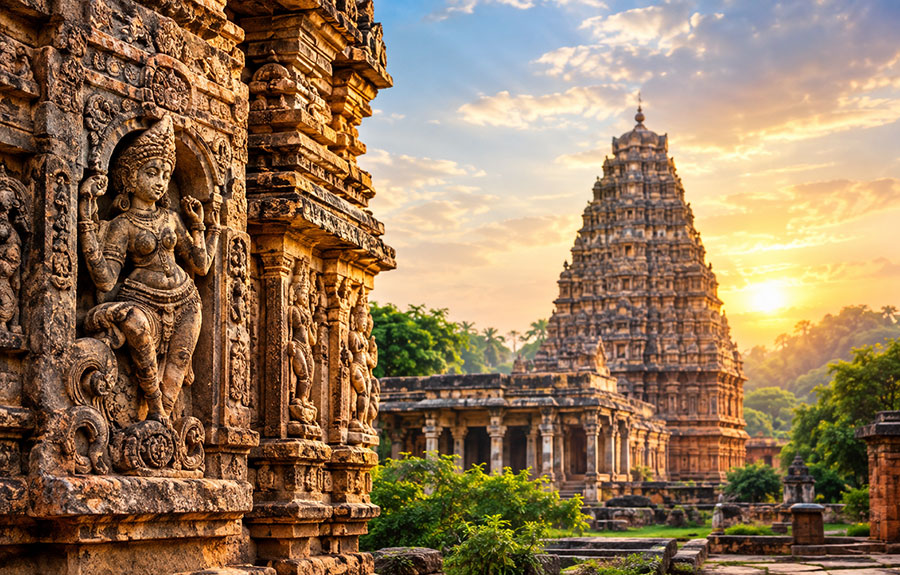
India’s temples are more than places of worship: they are living archives of sculpture, painting, architecture, music, craft and community memory. Across the country, stone panels once carried stories from epics and Puranas; painted walls brought divine figures to life; and carved pillars showed dancers, musicians, animals, flowers and everyday scenes. Yet not every work survived. Some were damaged by weather, fire, conflict or neglect. Some were covered by later layers of plaster or paint. Others were removed, stolen, reused as building material, or left in places where few people know what they are seeing.
The phrase “forgotten temple art” does not describe one single mystery. It points to many different histories: art that has disappeared, art that remains but is difficult to access, and art that survives in fragments without its original setting. Understanding those differences is the first step towards protecting what remains.
What Do We Mean by Forgotten Temple Art?
Temple art includes more than the main deity or the best-known tower. It can include sculpted doorways, ceiling panels, painted mandapas, guardian figures, inscriptions, ornamental motifs, ritual objects, and fragments that once belonged to a larger building. A temple may still be active while its older paintings are fading, or a ruined shrine may retain beautiful carvings even after its roof and upper structure have disappeared.
“Forgotten” is therefore not always the same as “lost.” A sculpture may be documented in an old survey but difficult to locate today; a mural may survive behind a later surface; and an architectural fragment may have been moved from its original position. Each case needs evidence, careful documentation and respect for the people connected to the site.
Why Has Some Indian Temple Art Disappeared?
1. Weather, water and the passage of time
Stone, brick, lime plaster and natural pigments all respond differently to their surroundings. Water seepage can loosen painted plaster; repeated wetting and drying can weaken surfaces; wind and airborne grit can wear away carvings; and vegetation can push into cracks. In some temples, soot, dust, insects, bats and changes in humidity create additional conservation challenges. Even a protected monument needs regular inspection and appropriate maintenance.
2. Neglect and unsuitable repairs
Historic surfaces can be harmed when damaged walls are covered with modern cement, old murals are whitewashed, or traditional paintings are repainted without recording what lies underneath. A repair that looks neat in the short term may trap moisture or obscure original details. Conservation work is most effective when specialists first understand the materials and causes of damage, then choose the least intrusive suitable treatment.
3. Conflict, changing use and rebuilding
Temples have been altered across centuries. Buildings may be expanded, rebuilt, abandoned or adapted as patterns of settlement and worship change. Conflict and deliberate damage have also affected some sites at different points in history. It is important, however, not to attribute every missing sculpture or ruined temple to one event or community without reliable historical evidence. Each site has its own timeline, and surviving inscriptions, archaeological records and architectural study help distinguish fact from assumption.
4. Theft and the removal of sculptures
Portable stone or metal images can be targeted by antiquities thieves. When an object is removed, the loss is not only physical: its original position, ritual context, relationship to other carvings and local history may also be lost. Government records have documented thefts of antiquities from protected monuments, including temple sculptures. Some objects have been recovered, while other cases remain unresolved. Inventory records, photography, secure storage where appropriate and prompt reporting all matter.
5. Urban growth, encroachment and submerged sites
Some historic sites become difficult to trace as settlements expand or land use changes. Others have been affected by reservoirs and large infrastructure projects. A Government of India statement in 2018 described a survey of 50 missing monuments or sites, listing urbanisation, submergence and untraceable locations among the issues. That figure referred to the specific survey reported at the time; it should not be read as a current count of every lost temple or artwork in India.
Hidden, Buried or Hard to See: Art That May Still Survive
Not every missing-looking artwork has been destroyed. Some shrines are partly below present ground level after centuries of soil accumulation or changes in drainage. Other sacred spaces are enclosed within later structures, while older layers of painting can be concealed by limewash or later decoration. In some places, carved fragments lie near a temple rather than in their original architectural positions.
These possibilities should not encourage anyone to dig, scrape walls or remove stones independently. Unauthorised excavation can permanently damage archaeological evidence, and scraping a painted surface may destroy the very layer someone hopes to reveal. Discovery and conservation require permission, trained specialists and a documented process.
Examples That Help Us Understand What Survives
The Chola paintings at Brihadisvara Temple, Thanjavur
The Brihadisvara Temple is famous for its monumental architecture, but its painted heritage is equally important. The Indira Gandhi National Centre for the Arts notes that paintings in the passageway around the sanctum preserve rare examples of Chola-period painting. Their survival reminds us that temple art is not limited to stone sculpture—and that delicate painted surfaces can be among the most vulnerable parts of a historic building.
Kerala’s mural traditions
Kerala’s temple and palace murals preserve a distinctive visual language built from carefully prepared surfaces, pigments and narrative compositions. The Kerala Mural Archive highlights the importance of surviving works such as the Ramayana mural at Mattancherry Palace, while also drawing attention to the damage and loss affecting older painted interiors. These paintings are valuable not simply because they are beautiful, but because they preserve artistic methods and stories that may otherwise be difficult to reconstruct.
Harsat Mata Temple, Abhaneri, Rajasthan
The Archaeological Survey of India describes Harsat Mata Temple as a dilapidated structure in which the sanctum and parts of the architectural arrangement survive. Its carved panels include religious and secular themes, such as dance, music, recreation and scenes of daily life. The site shows how a damaged building can still preserve a rich record of the world its artists observed and imagined.
Fragments and missing monuments
Across India, records sometimes refer to sculptures or structures that are damaged, displaced or difficult to trace. A missing monument is not automatically proof that every artwork associated with it has vanished; fragments may remain, be reused elsewhere or survive in photographs and older surveys. Equally, a fragment cannot always be assigned confidently to a specific temple without supporting evidence. Researchers compare inscriptions, style, materials, maps, archival photographs and local knowledge before making such connections.
Why Temple Art Matters Beyond Religion
Temple art offers evidence about regional craftsmanship, trade, clothing, jewellery, musical instruments, dance, animals, plants and ideas about the human body. Carvings can preserve details that written sources do not describe. Inscriptions may record patrons, donations, guilds or the names of rulers. Murals may show how stories were interpreted in a particular place and period.
For local communities, these works can also hold devotional meaning and family memory. For artists and students, they are sources of technique and design. For historians and archaeologists, they help reconstruct changing styles and networks of patronage. Protecting temple art is therefore both a cultural responsibility and a way to keep knowledge available for future generations.
How Can India Protect Its Forgotten Temple Art?
- Document before repairing: Create clear photographs, measured drawings, condition reports and inventories before any conservation work begins.
- Use trained conservators: Historic stone, lime plaster, pigments and metal objects need treatments suited to their original materials.
- Prevent water damage: Maintain roofs, drainage and ventilation carefully, without introducing repairs that trap moisture or damage original fabric.
- Stop illegal removal: Record sculptures and ritual objects, report suspicious activity, and support lawful documentation and recovery efforts.
- Listen to local communities: Temple administrators, worshippers, residents, craftspeople and historians may hold knowledge that is absent from formal records.
- Share responsible information: Museums, schools, heritage organisations and digital archives can publish verified descriptions and images with appropriate permissions.
- Encourage careful tourism: Visitors should not touch fragile murals, climb on carvings, scratch names into stone or remove fragments as souvenirs.
Conservation is not simply about making an old building look new. A responsible approach protects original material, records uncertainty and avoids inventing missing details. Where reconstruction is not supported by evidence, a carefully preserved ruin may tell a more honest story than a visually complete but speculative restoration.
What Can Readers Do?
You do not need to be an archaeologist to help protect heritage. When visiting a historic temple, follow site rules and choose local guides who respect the monument. Share verified information rather than sensational claims. If you notice apparent damage or suspected theft, report it to the site authority or relevant heritage department instead of confronting anyone or attempting to handle the object yourself.
Photographs can help create a record, but always respect photography restrictions, worshippers’ privacy and the site’s rules. If you publish an image, include the correct place name and avoid presenting an uncertain identification as fact. Small habits—careful visits, responsible storytelling and support for conservation—help keep heritage visible.
Frequently Asked Questions
Does “forgotten temple art” mean the artwork has been destroyed?
No. It may mean that art has been damaged, covered, displaced, poorly documented or made difficult to access. Each case needs evidence before its status can be described accurately.
Can hidden temple paintings be uncovered?
Sometimes historic layers may survive beneath later coatings, but uncovering them is specialist conservation work. Scraping or removing paint without expert assessment can cause irreversible damage.
Why are temple murals often fragile?
Many murals are painted on plaster and can be affected by moisture, salts, soot, dust, biological growth, temperature changes and unsuitable repairs. Their condition depends on the building, materials and local environment.
Who is responsible for protecting temple art in India?
Responsibilities vary by site and ownership. The Archaeological Survey of India and state heritage departments protect many monuments, while temple trusts, local bodies, museums, conservation professionals and communities also play important roles. Visitors should follow the rules of the particular site.
Where can I learn more about India’s temple heritage?
Start with official monument records and reputable cultural institutions, such as the Archaeological Survey of India, the Indira Gandhi National Centre for the Arts, and established conservation or mural documentation projects. Compare sources and check dates before repeating a claim.
Explore Reliable Heritage Resources
- Archaeological Survey of India (ASI) — official information about protected monuments and archaeological work.
- IGNCA: Brihadisvara Temple, Thanjavur — information about the temple’s iconography and surviving Chola paintings.
- ASI Jaipur Circle: Harsat Mata Temple — an official description of the surviving architecture and sculpture.
- Kerala Mural Archive — digital documentation and context for Kerala’s mural heritage.
- Press Information Bureau: Survey of missing monuments (2018) — a dated government statement explaining some of the challenges in tracing monuments.
Final Thoughts: Saving the Stories Carved in Stone and Colour
India’s forgotten temple art is not one lost treasure waiting to be found. It is a vast and varied heritage of surviving masterpieces, damaged surfaces, displaced fragments and unanswered questions. Some works can still be protected; some may be recovered through research; and some losses may never be fully reversed. Honest documentation helps us understand the difference.
Every careful record, responsible restoration and informed visit can help keep these stories alive. The aim is not to turn every ruin into something new, but to respect what remains, learn from the evidence, and pass on India’s extraordinary artistic inheritance with care.